Showing posts with label Haunted Prisons. Show all posts
Showing posts with label Haunted Prisons. Show all posts
Tuesday, September 5, 2017
HGB Ep. 220 - Kentucky State Penitentiary
Moment in Oddity - Tomato as the Wolf Peach
Suggested by: Shelby Hammond
Some people may not be aware that a tomato is not actually a vegetable. It was declared to be one in the courts in 1893, but botanically, the tomato is a fruit, more specifically classified as a berry. When the tomato finally made its way to Europe, many Europeans associated it with poisonous plants like nightshade and mandrake. The tomato plant is actually part of the nightshade family, Solanaceae. (Sole ah niece ee i) German folklore claimed that witches used these plants to summon werewolves. The old German word for tomato was wolfpfirsich (wolfpfeersick.) The tomato species name became Lycopersicon (like oh purse ican) esculentum (ess coo lentum) in the 18th century, which literally means "edible wolf peach." Many believe that Linnaeus (Lyn nigh us) chose this name because he was familiar with the legend about tomatoes being used to attract werewolves. During colonial times, tomatoes were used strictly as decoration because the colonists believed eating a tomato would turn your blood to acid. Farmers who tried to sell tomatoes in the markets had no luck convincing anyone to buy them. Perhaps that is why the lore then switched to large red tomatoes being able to scare evil spirits away. People took to placing them on windowsills. Putting them on the hearth was thought to bring prosperity. So the next time you eat a tomato sandwich, now you know that there is a lot of fun lore connected to them and that, certainly is odd!
This Month in History - French Aviators Dieudonne Coste and Maurice Bellonte Make 1st Non-stop Flight from Europe to the USA.
In the month of September, on the 2nd, in 1930, French aviators Dieudonne Coste and Maurice Bellonte made the first non-stop flight from Europe to the USA. Coste had set flight distance records before and he was also a fighter ace during World War I. After the war, he flew in civil aviation and by 1925 he was performing record breaking flights. In 1929, he partnered with another record breaking pilot, Maurice Bellonte, and the two made an attempt to cross the North Atlantic Ocean westbound, from Villacoublay near Paris to New York. Bad weather forced them back. They set off again on September 1st in 1930 in a red Breguet 19 aeroplane from Paris Le Bourget Field aerodrome. They arrived at Curtiss Field aerodrome in Valley Stream, Long Island New York after a 37 hour and 18 minutes flight. An enormous crowd awaited them including Charles Lindbergh and his wife. There was a ticker-tape reception and a meeting with President Hoover on September 8th. An interesting side story involved the loss of their navigational map out the window while flying over Portsmouth, New Hampshire. Two children saw the map falling from the sky while they were watching for the flight to cross over their farm and they retrieved it. They returned the map to Costes after he asked for its return through the media.
Kentucky State Penitentiary
The Kentucky State Penitentiary is known as the "Castle on the Cumberland." The prison is perched along the Cumberland River and is Kentucky's oldest prison facility. Construction on the facility began in October of 1884, headed by Governor Luke Blackburn after the Kentucky legislature passed a bill authorizing the construction. The prison officially opened in 1889. The worst of the worst have found their way to this place and male death row inmates have been housed here. And since 1911, 164 men have been executed at the penitentiary. Because of the deaths and the energy, the prison is reputedly haunted. Author and paranormal investigator, Steve E. Asher joins us to share the history and hauntings of the Kentucky State Penitentiary.
The Kentucky State Penitentiary was meant to bring reform to the prison system. Life in prison before the 1880s was horrific. An study conducted at the original Kentucky State Prison found that 20% of inmates had pneumonia and seventy-five percent had scurvy. Descriptions in the study claimed that the jail had "slime covered walls, open sewage, and graveyard coughs." Approximately seventy of the one-thousand prisoners had died in 1875. The Kentucky State Penitentiary became the jail for executions and Old Sparky took its first victim on July 8, 1911. That convict was a black man named James Buckner, who had been convicted of murder at Lebanon, Marion County. The last execution was in 2002 by lethal injection. Steve Asher worked at the jail and has collected the stories of those who have experienced paranormal activity.
Is the Kentucky State Penitentiary haunted? That is for you to decide!

Monday, April 4, 2016
HGB Ep. 116 - Moundsville State Prison
Moment in Oddity - Bella in the Wych Elm
by: Bob Sherfield
In the spring of 1943, in Hagley Wood near Stourbridge, in Worcestershire, whilst out poaching, four boys came across a large wych elm. One of the group, Bob Farmer, climbed the tree looking for bird eggs. In the hollow trunk he spotted what he believed to be an animal skull. Retrieving it, he was horrified to find that it was human. The boys panicked because they had trespassed, so they decided not to tell anyone. Later, one of the boys felt guilty and told his parents of the discovery and they called the police. In the trunk was an almost complete skeleton, along with a shoe, a gold ring and fragments of clothing. A hand was found buried near the tree. Forensics showed that the skeleton was a female, aged 35-40. She had been dead for at least 18 months. Taffeta within the mouth indicated that she had been asphyxiated and placed into the cavity of the tree whilst still warm. The police trawled through missing person reports and dental records for a lead, but to no avail. She seemed to have appeared from nowhere, and was missed by no one. Christmas came and graffiti began to appear. "Who put Luebella down the wych elm?" said the first one. "Hagley Wood Bella", said another. “Who put Bella in the wych elm?” became a common sight across the area. As recently as 1999, that message appeared on a 200 year old obelisk in nearby Wychbury Hill. Two years after the discovery, an anthropologist set forth a theory that the buried hand indicated use in an occult ceremony known as the “Hand of Glory” and that “Bella” had been a ritualistic murder. The idea of witchcraft caught the imagination of the public, but in 1953 a woman named Anna contacted a local newspaper claiming to know the killer's identity. Bella, she said had been part of a spy ring gathering intelligence to aid the German bombing of Birmingham. In 1968, a book titled "Murder by Witchcraft" claimed that the records of the Abwehr (a German intelligence agency) showed Bella had a been a Nazi Spy who had been parachuted into the West Midlands in 1941, but disappeared without making radio contact. Sometime after 1999, the declassified files of the wartime MI5 divulged something interesting. In January of 1941, a captured Gestapo agent, a Josef Jakobs, was carrying a photo of a woman who he named as a German singer and actress, Clara Bauerle. He revealed how Clara, who had spent time before the war working in the music halls of the West Midlands, had been due to be parachuted into that area in 1941. Curiously, her career seems to come to an abrupt halt at that time, making no appearances after that date. Jakobs was convicted of being a spy and became the last person to be executed at the Tower of London. Bella also could have been a Birmingham prostitute. Another prostitute told police in 1944 that Bella had disappeared three years before. Another story that came out was reported by Una Mossop in 1953. She claimed her cousin, Jack, had confessed that he and a Dutchmen had been out drinking with a woman who had passed out, and as a prank they had placed her in the tree hoping so she would wake up the next morning scared and confused. She said Jack Mossop had been confined to a mental hospital, plagued by reoccurring dreams of a woman staring at him from a tree trunk. He died before the discovery of the body. The official closure of the police investigation and publication of the police files stated that whilst DNA evidence would prove useful, the whereabouts of the bones were now unknown. A skeleton being found inside a tree, certainly is odd!
This Day in History - Martin Luther King Jr. Assassinated
by: Kristin Swintek
On this day, April 4th, in 1968, Martin Luther King, Jr. was assassinated in Memphis, TN. King was born on January 15, 1929 in Altanta, GA to Reverend Martin Luther King, Sr. and Alberta King. Martin Luther King is best known for his work as a Civil Rights leader. During the Civil Rights Movement, King led the 1955 Montgomery Bus Boycott, helped found the Southern Christian Leadership Conference, in 1963 helped organize the March on Washington where is gave his famous “I Have A Dream” speech. In 1964, King won the Nobel Peace Prize for combating racial inequality through nonviolence. In 1968, King and the Southern Christian Leadership Conference began working on the Poor People’s Campaign to help address issues of economic justice. In late March, he traveled to Memphis, TN in support of Black sanitary public works employees, whom had been striking for 3 weeks. On his way down, his flight was delayed due to a bomb threat made on the plane in which he would be traveling. In his final speech on April 3 at the Mason Temple in Memphis he said:
“Well, I don’t know what will happen now. We’ve got some difficult days ahead. But it doesn’t matter with me now. Because I’ve been to the mountaintop. And I don’t mind. Like anybody, I would like to live a long life. Longevity has its place. But I’m not concerned about that now. I just want to do God’s will. And He’s allowed me to go up to the mountain. And I’ve looked over. And I see the Promise land. I may not get there with you. But I want you to know tonight, that we, as a people, will get to the promised land. So I’m happy tonight. I’m not worried about anything. I’m not fearing any man. Mine eyes have seen the glory of the coming of the Lord.”
King was staying at the Lorraine Motel in room 306 where he was with Reverend Ralph David Abernathy and Jesse Jackson. King had gone out onto the balcony near his room where he was shot at 6:01pm by a single bullet. Witnesses saw a man fleeing the house across the street. King was rushed to St. Joseph’s Hospital where he was pronounced dead one hour later after an attempt of emergency surgery. King’s killer was identified as James Earl Ray who had fled the scene of the crime which led to a worldwide manhunt. He was apprehended at London Heathrow Airport two months later. The Lorraine Motel in Memphis is now the site of The Nation Civil Rights Museum where white wreath is hung on the balcony and his room is exactly as it was in 1968.
Moundsville State Prison (Suggested by listeners Josh and Sarah Kitchen)
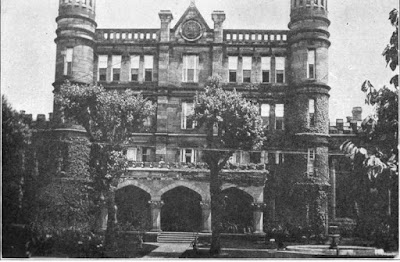
The West Virginia Penitentiary is located in Moundsville, so most people know it as Moundsville State Penitentiary. In its day, it was one of the most violent prisons in the United States. The Gothic architecture of the building resembles a castle with turrets and battlements. This place truly was a fortress, not as protection from outside forces, but to keep the bad inside. It would seem that some of the inmates of the prison still remain in the afterlife. Join us as we explore the history and hauntings of the Moundsville State Penitentiary with our special guest, listener and paranormal investigator, Josh Kitchen.
Moundsville, West Virginia was named for Grave Creek Mound that is near the city and across from the West Virginia Penitentiary. Ancient Mound Builders made this conical shaped burial mound and it is one of the largest burial mounds in the United States. The indigenous people were known as the Adena People and it is estimated that the mound is made from 60,000 tons of dirt. Merriwether Lewis actually wrote of the mound in his journal on a trip to meet William Clark for an exploration of the Louisiana Purchase in 1803. Moundsville is a combination of two towns, Elizabethtown that was settled by Samuel and James Tomlinson and incorporated in 1830 and Mound City that was incorporated in 1832. The towns combined in 1865.
As the Civil War raged on in America, the state of Virginia was embroiled in its own personal conflict. Part of the state was preparing to secede. When it did, West Virginia found itself lacking in jail space. They attempted to keep prisoners in small county jails, but in 1865 nine prisoners broke out. The community was outraged and the press started putting pressure on the legislature for a real penitentiary. The government bought ten acres of land just outside of the city of Moundsville for $3,000 in 1866 and built a temporary wooden structure. Officials liked the structure of the North Illinois Penitentiary and they designed their new jail after that and used prison labor to construct the building. Hand cut sandstone was quarried to serve as building material. The North Wagon Gate was the first building erected. Next came the North Hall and South Hall cell blocks. The North Hall housed the kitchen, dining area, the hospital and a chapel. A four story tower connected the cell blocks.
The jail opened with 251 inmates, many of whom had actually built the penitentiary. Workshops were built and the prison had multiple industries set up including carpentry, blacksmithing, baking, painting and wagon building. As was the case with other penitentiaries at this time, the goal was to reform prisoners and the West Virginia jail initially was a good place to serve time. There was education and a library and there was plenty of food. But then things went so horribly wrong. Remember in the intro that we said that this was one of the most violent prisons in the country. Things changed. Conditions worsened and the prison quickly became overcrowded. And the worst of the worst were imprisoned here. These were murderers and rapists and all around brutes.
There was torture here. Guards hid whips and liked to use them. The two unique forms of torture used at Moundsville were "Kicking Jenny" and "The Shoo-Fly." The Kicking Jenny was an instrument built at the jail in the shape of a quarter circle. Prisoners were strapped to it naked, stretched and then whipped. The Shoo-Fly was an instrument that a prisoner could be strapped to with his head pinned back and he was completely unable to move. He was then blasted with ice water from a hose until he nearly drowned.
Death became a key part of the prison. Men on death row were hung and electrocuted in the electric chair. The hopeless committed suicide. And many were preyed upon by their own peers. Thirty-six men were murdered within the walls. The first execution took place in 1899 and hangings took place until 1949. Eighty-five men died in this way. Electrocutions started in 1951 via "Old Sparky." Nine men died in this way and then West Virginia abolished capital punishment in 1965. At the rime that the electric chair was being pushed forward legislatively, the warden at the prison sent a letter to the state legislature explaining why this would be a mistake. He wrote:
The penitentiary was officially closed via court order on March 27, 1995 because of the inhumane conditions inside of the prison. In 1998, the Moundsville Economic Development Council obtained a twenty-five year lease on the prison and they use the funds they make for refurbishment of the structures. There are daily tours and paranormal investigations are welcomed. The jail is open from April through November. In October, they host the haunted attraction "Dungeon of Horrors."
One of the infamous inmates at this prison had a connection to the Greenbriar Ghost that we talked about in the Moment in Oddity segment of episode 9. The story goes like this:
In 1873, Elva Zona Heaster was born in Greenbriar County, West Virginia. In 1896, she met and fell in love with a drifter who was passing through Greenbriar named Erasmus and they married soon after. A young boy running an errand for Erasmus to the home that Zona and Erasmus shared, found Zona dead at the bottom of the stairs. The local doctor gave the body of Zona a cursory examination after Erasmus had already moved the body to the bedroom and dressed Zona in her finest dress. The doctor made the exam brief, as Erasmus seemed very overcome by grief and the doctor decided that Zona had fainted and fallen down the stairs. During the wake and before burial, Erasmus was very watchful of the body, concealing Zona's neck and keeping people away from the body. Shortly after this, Zona's mother claimed that her daughter appeared to her in dreams for four nights in a row. The ghost would explain that Erasmus had been cruel and beaten her many times. On this final beating, the ghost claimed that Erasmus had broken her neck and she turned her head almost completely around to show her mother. Zona's mother went to the Prosecutor and Zona's body was exhumed after the doctor admitted he had not done a thorough examination. It was proven that Zona's neck was broken and even more incriminating, her windpipe had been crushed. Erasmus went to trial and his defense tried to make Zona's mother appear crazy by asking her about the ghostly visits, something the prosecution had avoided. Zona's mother was unwavering and the people of the town believed her, so the plan of the defense backfired. Erasmus was found guilty and sentenced to life in prison, where he died three years later. The ghost never appeared again and many believe Zona's mother made the whole story up because she didn't think anybody would listen to her theory that her daughter had been murdered without a witness.
Prisons breed pain and loneliness. They are stone structures that seem to absorb all the emotions experienced by those inside and most of those feelings are negative. Was it the violence of the prison and the deaths there that have led to reputed hauntings at this location or does the large burial mound across from it have something to do with the supernatural activity? Or was it a combination of the two? Most of the activity takes place in the shower cages, Death Row, the chapel, the Sugar Shack, which was a recreational area and the North Wagon Gate where executions were conducted. The circular entrance gate is known to turn all by itself.
There is the ghost of a maintenance man who used to live in the basement still hanging out down there. The prisoners believed he was a snitch and it would seem that he would report to the guards everything that the inmates were up to. So they cornered him while he was on the toilet and stabbed him to death. He is now seen as a shadow figure according to some people. Polly Gear described the shadow man as looking like black static as it moved. The face and hands were not defined, but it was shaped like a man. Polly shined her flashlight at the shadow and her light went through it and it seemed to spook the shadow figure. It did not feel threatening to her. Here is the first image captured of him in 2004 by Polly:

There is a malevolent spirit in the prison that goes by the name Robert. This was an inmate who was beaten to death by guards and buried within the prison walls. He is angry and is known to touch and scare visitors. Disembodied screams and footsteps are heard, noises with no origin, cell doors open and close on their own. Josh has several recordings he has shared with us that we are going to play on the podcast featuring EVPs and unexplained noises.
Moundsville is not unique when it comes to prisons. So many of these older and closed penitentiaries seem to be haunted. Do the lost spirits of inmates still roam these halls? Is the Moundsville State Prison haunted? That is for you to decide!
by: Bob Sherfield
In the spring of 1943, in Hagley Wood near Stourbridge, in Worcestershire, whilst out poaching, four boys came across a large wych elm. One of the group, Bob Farmer, climbed the tree looking for bird eggs. In the hollow trunk he spotted what he believed to be an animal skull. Retrieving it, he was horrified to find that it was human. The boys panicked because they had trespassed, so they decided not to tell anyone. Later, one of the boys felt guilty and told his parents of the discovery and they called the police. In the trunk was an almost complete skeleton, along with a shoe, a gold ring and fragments of clothing. A hand was found buried near the tree. Forensics showed that the skeleton was a female, aged 35-40. She had been dead for at least 18 months. Taffeta within the mouth indicated that she had been asphyxiated and placed into the cavity of the tree whilst still warm. The police trawled through missing person reports and dental records for a lead, but to no avail. She seemed to have appeared from nowhere, and was missed by no one. Christmas came and graffiti began to appear. "Who put Luebella down the wych elm?" said the first one. "Hagley Wood Bella", said another. “Who put Bella in the wych elm?” became a common sight across the area. As recently as 1999, that message appeared on a 200 year old obelisk in nearby Wychbury Hill. Two years after the discovery, an anthropologist set forth a theory that the buried hand indicated use in an occult ceremony known as the “Hand of Glory” and that “Bella” had been a ritualistic murder. The idea of witchcraft caught the imagination of the public, but in 1953 a woman named Anna contacted a local newspaper claiming to know the killer's identity. Bella, she said had been part of a spy ring gathering intelligence to aid the German bombing of Birmingham. In 1968, a book titled "Murder by Witchcraft" claimed that the records of the Abwehr (a German intelligence agency) showed Bella had a been a Nazi Spy who had been parachuted into the West Midlands in 1941, but disappeared without making radio contact. Sometime after 1999, the declassified files of the wartime MI5 divulged something interesting. In January of 1941, a captured Gestapo agent, a Josef Jakobs, was carrying a photo of a woman who he named as a German singer and actress, Clara Bauerle. He revealed how Clara, who had spent time before the war working in the music halls of the West Midlands, had been due to be parachuted into that area in 1941. Curiously, her career seems to come to an abrupt halt at that time, making no appearances after that date. Jakobs was convicted of being a spy and became the last person to be executed at the Tower of London. Bella also could have been a Birmingham prostitute. Another prostitute told police in 1944 that Bella had disappeared three years before. Another story that came out was reported by Una Mossop in 1953. She claimed her cousin, Jack, had confessed that he and a Dutchmen had been out drinking with a woman who had passed out, and as a prank they had placed her in the tree hoping so she would wake up the next morning scared and confused. She said Jack Mossop had been confined to a mental hospital, plagued by reoccurring dreams of a woman staring at him from a tree trunk. He died before the discovery of the body. The official closure of the police investigation and publication of the police files stated that whilst DNA evidence would prove useful, the whereabouts of the bones were now unknown. A skeleton being found inside a tree, certainly is odd!
This Day in History - Martin Luther King Jr. Assassinated
by: Kristin Swintek
On this day, April 4th, in 1968, Martin Luther King, Jr. was assassinated in Memphis, TN. King was born on January 15, 1929 in Altanta, GA to Reverend Martin Luther King, Sr. and Alberta King. Martin Luther King is best known for his work as a Civil Rights leader. During the Civil Rights Movement, King led the 1955 Montgomery Bus Boycott, helped found the Southern Christian Leadership Conference, in 1963 helped organize the March on Washington where is gave his famous “I Have A Dream” speech. In 1964, King won the Nobel Peace Prize for combating racial inequality through nonviolence. In 1968, King and the Southern Christian Leadership Conference began working on the Poor People’s Campaign to help address issues of economic justice. In late March, he traveled to Memphis, TN in support of Black sanitary public works employees, whom had been striking for 3 weeks. On his way down, his flight was delayed due to a bomb threat made on the plane in which he would be traveling. In his final speech on April 3 at the Mason Temple in Memphis he said:
“Well, I don’t know what will happen now. We’ve got some difficult days ahead. But it doesn’t matter with me now. Because I’ve been to the mountaintop. And I don’t mind. Like anybody, I would like to live a long life. Longevity has its place. But I’m not concerned about that now. I just want to do God’s will. And He’s allowed me to go up to the mountain. And I’ve looked over. And I see the Promise land. I may not get there with you. But I want you to know tonight, that we, as a people, will get to the promised land. So I’m happy tonight. I’m not worried about anything. I’m not fearing any man. Mine eyes have seen the glory of the coming of the Lord.”
King was staying at the Lorraine Motel in room 306 where he was with Reverend Ralph David Abernathy and Jesse Jackson. King had gone out onto the balcony near his room where he was shot at 6:01pm by a single bullet. Witnesses saw a man fleeing the house across the street. King was rushed to St. Joseph’s Hospital where he was pronounced dead one hour later after an attempt of emergency surgery. King’s killer was identified as James Earl Ray who had fled the scene of the crime which led to a worldwide manhunt. He was apprehended at London Heathrow Airport two months later. The Lorraine Motel in Memphis is now the site of The Nation Civil Rights Museum where white wreath is hung on the balcony and his room is exactly as it was in 1968.
Moundsville State Prison (Suggested by listeners Josh and Sarah Kitchen)

The West Virginia Penitentiary is located in Moundsville, so most people know it as Moundsville State Penitentiary. In its day, it was one of the most violent prisons in the United States. The Gothic architecture of the building resembles a castle with turrets and battlements. This place truly was a fortress, not as protection from outside forces, but to keep the bad inside. It would seem that some of the inmates of the prison still remain in the afterlife. Join us as we explore the history and hauntings of the Moundsville State Penitentiary with our special guest, listener and paranormal investigator, Josh Kitchen.
Moundsville, West Virginia was named for Grave Creek Mound that is near the city and across from the West Virginia Penitentiary. Ancient Mound Builders made this conical shaped burial mound and it is one of the largest burial mounds in the United States. The indigenous people were known as the Adena People and it is estimated that the mound is made from 60,000 tons of dirt. Merriwether Lewis actually wrote of the mound in his journal on a trip to meet William Clark for an exploration of the Louisiana Purchase in 1803. Moundsville is a combination of two towns, Elizabethtown that was settled by Samuel and James Tomlinson and incorporated in 1830 and Mound City that was incorporated in 1832. The towns combined in 1865.
As the Civil War raged on in America, the state of Virginia was embroiled in its own personal conflict. Part of the state was preparing to secede. When it did, West Virginia found itself lacking in jail space. They attempted to keep prisoners in small county jails, but in 1865 nine prisoners broke out. The community was outraged and the press started putting pressure on the legislature for a real penitentiary. The government bought ten acres of land just outside of the city of Moundsville for $3,000 in 1866 and built a temporary wooden structure. Officials liked the structure of the North Illinois Penitentiary and they designed their new jail after that and used prison labor to construct the building. Hand cut sandstone was quarried to serve as building material. The North Wagon Gate was the first building erected. Next came the North Hall and South Hall cell blocks. The North Hall housed the kitchen, dining area, the hospital and a chapel. A four story tower connected the cell blocks.
The jail opened with 251 inmates, many of whom had actually built the penitentiary. Workshops were built and the prison had multiple industries set up including carpentry, blacksmithing, baking, painting and wagon building. As was the case with other penitentiaries at this time, the goal was to reform prisoners and the West Virginia jail initially was a good place to serve time. There was education and a library and there was plenty of food. But then things went so horribly wrong. Remember in the intro that we said that this was one of the most violent prisons in the country. Things changed. Conditions worsened and the prison quickly became overcrowded. And the worst of the worst were imprisoned here. These were murderers and rapists and all around brutes.
There was torture here. Guards hid whips and liked to use them. The two unique forms of torture used at Moundsville were "Kicking Jenny" and "The Shoo-Fly." The Kicking Jenny was an instrument built at the jail in the shape of a quarter circle. Prisoners were strapped to it naked, stretched and then whipped. The Shoo-Fly was an instrument that a prisoner could be strapped to with his head pinned back and he was completely unable to move. He was then blasted with ice water from a hose until he nearly drowned.
Death became a key part of the prison. Men on death row were hung and electrocuted in the electric chair. The hopeless committed suicide. And many were preyed upon by their own peers. Thirty-six men were murdered within the walls. The first execution took place in 1899 and hangings took place until 1949. Eighty-five men died in this way. Electrocutions started in 1951 via "Old Sparky." Nine men died in this way and then West Virginia abolished capital punishment in 1965. At the rime that the electric chair was being pushed forward legislatively, the warden at the prison sent a letter to the state legislature explaining why this would be a mistake. He wrote:
"The present system of conducting executions here is by all means the most humane, the safest and least painful and is less expense [sic]. From the time the subject is started from his cell until he reaches the scaffold, steps on the trap, is bound, strapped, the noose adjusted, the black cap placed, the brief prayer said, and the subject dropped and dead, is less than sixty seconds.Overcrowding was a problem and throughout the 1960s, more than a 1000 inmates were housed here. There were riots at the prison. One of them occurred in 1973 and five guards were taken captive. The basement of the prison was set on fire. People could hear the riots from outside of the prison. There was screaming and glass breaking. A couple of inmates were stabbed. Another riot occurred in 1985 and 15 hostages were taken that time. The prisoners demanded better conditions. One witness outside heard inmates requesting "better medical services, better living quarters, a pizza and some women." Several escapes were made from the jail over the years as well.
There have been twelve executions here since the law requiring executions at the penitentiary passed, three under my predecessors--nine under my administration. In every case there has not been the slightest hitch or error, and the subject has been subjected to no delay, so terribly hard to stand. Our people know exactly how to do this work and it is done quickly.
But the electric chair is the very opposite. It takes ten minutes to adjust the electrodes (which seems like ten hours), the sponges, and arrange for everything, for everything has to be done with the most absolute precision, and in the only two states that have this system, there have been recently the most unsatisfactory results, and the current has had to be applied over and over, to the great horror and disgust of the officials.
That is not all. Electrocution is the most horrible death known. Every nerve is shattered, every blood vessel bursted, the bones crushed and broken, and in ten minutes after, every particle of the victim's body is black and blue, a most gruesome sight--exactly what occurs to parts of the victim of a stroke of lightning."
The penitentiary was officially closed via court order on March 27, 1995 because of the inhumane conditions inside of the prison. In 1998, the Moundsville Economic Development Council obtained a twenty-five year lease on the prison and they use the funds they make for refurbishment of the structures. There are daily tours and paranormal investigations are welcomed. The jail is open from April through November. In October, they host the haunted attraction "Dungeon of Horrors."
One of the infamous inmates at this prison had a connection to the Greenbriar Ghost that we talked about in the Moment in Oddity segment of episode 9. The story goes like this:
In 1873, Elva Zona Heaster was born in Greenbriar County, West Virginia. In 1896, she met and fell in love with a drifter who was passing through Greenbriar named Erasmus and they married soon after. A young boy running an errand for Erasmus to the home that Zona and Erasmus shared, found Zona dead at the bottom of the stairs. The local doctor gave the body of Zona a cursory examination after Erasmus had already moved the body to the bedroom and dressed Zona in her finest dress. The doctor made the exam brief, as Erasmus seemed very overcome by grief and the doctor decided that Zona had fainted and fallen down the stairs. During the wake and before burial, Erasmus was very watchful of the body, concealing Zona's neck and keeping people away from the body. Shortly after this, Zona's mother claimed that her daughter appeared to her in dreams for four nights in a row. The ghost would explain that Erasmus had been cruel and beaten her many times. On this final beating, the ghost claimed that Erasmus had broken her neck and she turned her head almost completely around to show her mother. Zona's mother went to the Prosecutor and Zona's body was exhumed after the doctor admitted he had not done a thorough examination. It was proven that Zona's neck was broken and even more incriminating, her windpipe had been crushed. Erasmus went to trial and his defense tried to make Zona's mother appear crazy by asking her about the ghostly visits, something the prosecution had avoided. Zona's mother was unwavering and the people of the town believed her, so the plan of the defense backfired. Erasmus was found guilty and sentenced to life in prison, where he died three years later. The ghost never appeared again and many believe Zona's mother made the whole story up because she didn't think anybody would listen to her theory that her daughter had been murdered without a witness.
Prisons breed pain and loneliness. They are stone structures that seem to absorb all the emotions experienced by those inside and most of those feelings are negative. Was it the violence of the prison and the deaths there that have led to reputed hauntings at this location or does the large burial mound across from it have something to do with the supernatural activity? Or was it a combination of the two? Most of the activity takes place in the shower cages, Death Row, the chapel, the Sugar Shack, which was a recreational area and the North Wagon Gate where executions were conducted. The circular entrance gate is known to turn all by itself.
There is the ghost of a maintenance man who used to live in the basement still hanging out down there. The prisoners believed he was a snitch and it would seem that he would report to the guards everything that the inmates were up to. So they cornered him while he was on the toilet and stabbed him to death. He is now seen as a shadow figure according to some people. Polly Gear described the shadow man as looking like black static as it moved. The face and hands were not defined, but it was shaped like a man. Polly shined her flashlight at the shadow and her light went through it and it seemed to spook the shadow figure. It did not feel threatening to her. Here is the first image captured of him in 2004 by Polly:

There is a malevolent spirit in the prison that goes by the name Robert. This was an inmate who was beaten to death by guards and buried within the prison walls. He is angry and is known to touch and scare visitors. Disembodied screams and footsteps are heard, noises with no origin, cell doors open and close on their own. Josh has several recordings he has shared with us that we are going to play on the podcast featuring EVPs and unexplained noises.
Moundsville is not unique when it comes to prisons. So many of these older and closed penitentiaries seem to be haunted. Do the lost spirits of inmates still roam these halls? Is the Moundsville State Prison haunted? That is for you to decide!
Sunday, March 20, 2016
HGB Ep. 113 - Eastern State Penitentiary
Moment in Oddity - The Underwater City of Yonaguni Jima, Japan
Suggested by: Toby Hessenauer
Did you know there was a Japanese Atlantis? That is how some refer to a mysterious underwater city found near Yonaguni Jima, Japan. It is believed that the city was above water until an earthquake 2,000 years ago caused it to sink. The largest building in the underwater city is a megalithic stepped pyramid. The ruins were first discovered in 1985 by a local diver. Some believe this is the lost city of Mu, which has been thought to just be a legend. Masaaki Kimura is a marine geologist who has studied the site for 15 years. He claims that the stone appears to have quarry marks and etchings that could only have been made by humans. He has identified 15 structures including five temples, a large stadium, a triumphant arch and a castle. He even claims that there are formations that seem to resemble animals and that a relief featuring a cow-like creature is on the wall of a structure. The Japanese government has done nothing to preserve the site or draw attention to it because there is some controversy over whether this really is an underwater city. And therein lies part of the mystery. Not only is the city itself and whoever created it a mystery, but there are those who claim that the city is actually just a result of natural formations. Some scientists claim that earthquakes and tsumanis could have helped shape the sandstone under the water, so that it appears to be manmade. Whether it is manmade or natural made is still up for debate, but if this truly is the remains of some Atlantis-like ancient city, that would certainly be odd!
This Day in History - First Woman Executed in Electric Chair
by: Steven Pappas
On this day, March 20th, in 1899, Martha M. Place became the first woman to be executed by electric chair. Born September 18th, 1849, Martha was a typical girl. At the age of 23 she suffered a blow to the head, which her brother said she never fully recovered from. She became unstable. She eventually married Willliam Place in 1893. She was said to be jealous of her new step daughter Ida and the police were called on multiple occasions when Martha became violent. In February of 1898, William was attacked by Martha, who was wielding an ax. He managed to escape and go for help, but Ida was killed by Martha. Martha then tried to commit suicide by starting a gas leak, but was hospitalized and arrested. She pleaded innocence, but was found guilty and sentenced to die by electric chair. She was the third woman to be sentenced to death by this method, but because of the brutality of her crime, was the first for whom the sentence was carried out.
Eastern State Penitentiary (Suggested by listener Steven Fitzgerald, Research Assistant April Rogers-Krick)

Eastern State Penitentiary was built to start a reformation when it came to America's penal system. Prison was making the move from a place of punishment to a place of reform. Eastern State became the most expensive building in America when it was built in the late 1800s and it was the most famous prison in the world. Al Capone even spent time here. Officers and inmates have reported haunting activity for decades at the prison and this activity seems to have only increased since the penitentiary was closed to inmates for good. The reputation of the prison makes it a perfect place for the haunted house attraction it becomes every Halloween. But the ghosts here are very real. Join us as we explore the history and hauntings of the Eastern State Penitentiary!
The period after the American Revolution was considered a time of Enlightenment in America. Great American thinkers like Thomas Jefferson, John Adams, James Madison, Thomas Paine and Benjamin Franklin were challenging traditional beliefs when it came to religion, science and politics. Six major ideas to come out of the Enlightenment were deism, conservativism, liberalism, toleration, republicanism and scientific progress. The adoption of rational and humanistic principles developed during the Enlightenment affected prison reform and design. As we know from previous podcasts on prisons, many of these institutions were basically large holding pens where all genders and ages were thrown in together. Abuse by prison guards was the norm. With prison reform came changes to the American prison system.
In 1829, the Philadelphia Society for Alleviating the Miseries of Public Prisons opened Eastern State Penitentiary, an experiment in correcting behavior through solitary confinement and reform instead of punishment. The Society began in 1787 and met in the home of Benjamin Franklin. The group was led by Benjamin Rush and he expressed a desire that the group made a goal of having Philadelphia become the place known internationally for prison reform. The group believed that causing prisoners to have penitent hearts would lead to them reforming. That is why this prison was called a pentitentiary. Advocates for the system believed that if inmates were left alone for long enough, away from the dirty outside world, a criminal’s innate morality would prevail and straighten them out. Eastern State was considered the world’s first true penitentiary. Its system of incarceration was considered revolutionary, dubbed the “Pennsylvania System” or separate system. Inmates were held in separate confinement as a form of rehabilitation. The warden was legally required to visit every inmate every day and the overseers were mandated to see each inmate three times a day. Eastern State was designed by John Haviland and opened its doors on October 25, 1829.
Originally, inmates were to be housed in cells that could only be accessed by entering through a small exercise yard attached to the back of the prison. A small portal, just large enough to pass meals, opened onto the cell blocks. This design proved impractical, and in the middle of construction, cells construction was changed to allow prisoners to enter and leave the cell blocks through metal doors that were covered by a heavy wooden door to filter out noise. The halls were designed to have the feel of a church. It was believed by some that the doors were built small, so that prisoners would have a harder time getting out, thus minimizing an attack on a security guard. Others have explained that the small doors forced the prisoners to bow while entering their cell. This design forced the appearance of penance and ties to the religious inspiration of the prisons. The cells were made of concrete with a single glass skylight, representing the “Eye of God”, suggesting to the prisoners that God was always watching them. Fear was a key to instilling in prisoners a desire to never return to jail. Early Prisoners were petty criminals, muggers, purse-snatchers, pickpockets, burglars, etc. First time offenders often only served two years. Eastern State was intended to move the criminal toward spiritual reflection and change and not simply punishment. Proponents of the system believed that the criminals if exposed, in silence, to the thoughts of their behavior and the ugliness of their crimes, would become penitent.
There was an individual area for exercise outside each cell. High walls enclosed each yard so prisoners could not communicate. Exercise time was synchronized so that no two prisoners next to each other would be out at the same time. Prisoners were allowed to garden and to keep pets in their exercise yards. A hood was placed over the head of a prisoner by a guard when he left his cell. This was to prevent the prisoners from recognizing one another. Each individual cell had a faucet with running water over a flush toilet, as well as curved pipes along part of one wall, which served as central heating during the winter months. Hot water would be run through the pipes to keep the cells reasonably heated. Toilets were remotely flushed twice a week by the guards of the cellblock. The original design of the building was for seven one-story cell blocks, but by the time cell block three was completed, the prison was already over capacity.
All subsequent cell blocks had two floors. Toward the end, cell blocks 14 and 15 were hastily built due to overcrowding. They were built and designed by prisoners. Cell block 15 was for the worst behaved prisoners and the guards were gated off from them entirely. Inmates were punished with the “individual-treatment system.” At the time, this form of punishment was thought to be most effective. Due to overcrowding, the solitary confinement system eventually collapsed. By 1913, Eastern State officially abandoned the solitary system and operated as a congregate prison until it closed in 1970. After a riot at Holmesburg Prison in 1971, Eastern State was used briefly to house city inmates. Eastern State was one of the largest public-works in the early days of the United States.
The reality of Eastern State was anything, but reformatory. The guards and councilors designed a variety of physical and psychological torture regimens for various infractions. Prisoners would be doused in freezing water outside during winter months. The Iron Gag was an iron collar strapped around the tongue and chained to the inmate's wrists in a fashion such that struggling against the chains could cause the tongue to tear. Many inmates bled to death during this punishment. Other prisoners were strapped into the Mad Chair with tight leather restraints that prevented any movement and cut off circulation for days on end and given no food. The worst behaved prisoners were put into a pit called “The hole”, which was an underground cell dug under cell block 14 where they would have no light, no human contact, and little food for as long as two weeks at a time.
In the 19th century, Eastern State was a tourist destination. Charles Dickens and Alexis de Tocqueville were two of the most notable visitors. Visitors were able to speak with prisoners in their cells, proving that inmates were not isolated. However, prisoners themselves were not allowed to have any visits from family or friends during their incarceration. In 1831, after visiting Eastern State, Alexis De Tocqueville and Gustave de Beaumont wrote in their report to the French government: "Thrown into solitude... [the prisoner] reflects. Placed alone, in view of his crime, he learns to hate it; and if his soul be not yet surfeited with crime, and thus have lost all taste for any thing better, it is in solitude, where remorse will come to assail him.... Can there be a combination more powerful for reformation than that of a prison which hands over the prisoner to all the trials of solitude, leads him through reflection to remorse, through religion to hope; makes him industrious by the burden of idleness.."
Charles Dickens did not agree. He visited Eastern State in 1842 and in chapter seven of his travel journal, "American Notes for General Circulation," Dickens writes, "In its intention I am well convinced that it is kind, humane, and meant for reformation; but I am persuaded that those who designed this system of Prison Discipline, and those benevolent gentleman who carry it into execution, do not know what it is that they are doing....I hold this slow and daily tampering with the mysteries of the brain to be immeasurably worse than any torture of the body; and because its ghastly signs and tokens are not so palpable to the eye,... and it extorts few cries that human ears can hear; therefore I the more denounce it, as a secret punishment in which slumbering humanity is not roused up to stay."
Some of America’s most notorious criminals were held at Eastern State. Gangster Al Capone found himself in front of a judge for the first time in May 1929 and was sentenced to one year in Eastern State for a concealed weapons charge. He spent most of that sentence in relative comfort. Capone was allowed to furnish his cell with antique furniture, oriental rugs, oil paintings and a cabinet radio. He was allowed special privileges, like being allowed to conduct business through the warden. There was also Morris "The Rabbi" Bolber. He was the leader of an arsenic murder ring. People referred to him as "a veteran witch doctor and compounder of charms." Their main clientele were women who wanted to kill their husbands for insurance money. The group had killed 30 people. The Rabbi was serving a life sentence at Eastern State. Leo Callahan was arrested for assault and battery with intent to kill. He was the only inmate to successfully escape Eastern State and stay at large. He was never recaptured. He used a makeshift wooden ladder to accomplish this feat. The five Buzzard brothers all served time at the prison. Joe Buzzard was one of the best horse thieves in the country. There were women at the prison for 100 years and Freda Frost was the last female at the jail. She had poisoned her husband and killed him.
Bank Robber Slick Willie Sutton was apprehended on February 5, 1934 and sentenced to serve 25 to 50 years in Eastern State, for the machine gun robbery of the Corn Exchange Bank in Philadelphia, Pennsylvania. On April 3, 1945 Sutton was one of 12 convicts who escaped the institution through a tunnel. Sutton was recaptured the same day by Philadelphia police officers; this had been his fifth escape attempt at Eastern State. Willie Sutton claimed to be the mastermind of the tunnel escape. The truth is that the escape was planned and largely executed by Clarence “Kliney” Klinedinst, a plasterer, stone mason, burglar, and forger who looked a little like a young Frank Sinatra and had a reputation as a first-rate prison scavenger. Willie Sutton said, “If you give Kliney two weeks, he could get you Ava Gardner. If you give Kliney a year, he could get you out of prison.”
Like something out of the Shawshank Redemption, the escapees used spoons and flattened cans as shovels and picks, the tunnel crew, who worked in two-man teams for 30 minute shifts, slowly dug a 31-inch opening through the wall of cell 68. They then dug twelve feet straight down into the ground, and another 100 feet out beyond the walls of the prison. They removed dirt by concealing it in their pockets and scattering it in the exercise yard. They shored it up with scaffolding, illuminated, and even ventilated the tunnel. At about the halfway point, it linked up with the prison’s brick sewer system and the crew created a working connection between the two pipelines to deposit their waste while ensuring the noxious fumes were kept out of the tunnel. The tunnel escaped inspection several times thanks to a false panel Kliney treated to match the plaster of the cell and concealed by a metal waste basket.
After months of painfully slow labor, the tunnel was ready. On the the morning of April 3, 1945, the 12 prisoners made their escape, sneaking off to cell 68 on their way to breakfast. After all the designing, carving, digging, and building, Kliney made it a whole three hours before getting caught. He had faired better than Sutton who was free for only three minutes. By the end of the day, half the escapees were returned to prison while the rest were caught within a couple months. The first few escapees to be captured, including Sutton, were put in the Klondikes. The Klondikes were illegal confinement cells that were completely dark and had been secretly built by guards in the mechanical space below one of the cell blocks. These spaces were miserable, tiny holes that weren’t big enough to stand up in or wide enough to lie down. The tunnel itself was analyzed and mapped and then guards filled it with ash and covered it with cement. Until 2005 the location of the tunnel was lost. A non-profit dedicated to preserving the landmarked prison completed an archaeological survey to commemorate the 60th anniversary of the escape. To find the tunnel, the group created a search grid over the prison grounds near the entrance, the location of which was known from old photos. Using ground penetrating radar, the team was able to create vertical sections though the site in increments corresponding to the suspected width of the tunnel. After a couple failed attempts, the archaeologists detected a section of the tunnel that hadn’t collapsed and hadn’t been filled-in by the guards. A year later, a robotic rover was sent through the tunnels, documenting its scaffolding and lighting systems.
Although there were riots in 1919, 1924 and 1923, it was the riot of 1942 they saw the loss of life. All the riots were started due to a lack of quality food and poor conditions and the inmates were demanding better. In 1942, Eastern State instituted a cutback of food items, some of which included sugar and coffee. Because of these reductions, some of the inmates started to protest. During the meal periods, inmates implemented their own form of a hunger strike by refusing to eat anything but coffee. When their demands were not met, mattresses were set afire and the riot began. Because of heavy rain, smoke from the fire was driven down the ventilation shaft to where an inmate named Joseph Anncenski was and asphyxiated him. Two more inmates were overcome by the fire and one was killed during the riot.
By the 1960’s, Eastern State was in very bad shape. The cost of repair was too high and by 1970 the doors were closed. The city of Philadelphia bought Eastern State in 1980 and planned to refurbish and re-purpose the building. That was unsuccessful and the Pennsylvania Prison Society took over the prison in 1994 and opened it for tours. In 1997, it was turned into a museum. Eastern State Penitentiary Historic Site, Inc. took over management in 2001. Every Halloween the prison is opened as a haunted house attraction. Many people believe that Eastern State is Haunted. As early as the 1940’s guards and inmates reported mysterious visions and eerie experiences. The reports have only increased since the closing in 1970.
A locksmith was working in Cell Block #4 to remove a 140-year-old lock from the cell door. He suddenly was overcome by some kind of force that seemed to possess his body. He was unable to move. It was similar to sleep paralysis, only the locksmith had not been sleeping. Legend has it that when the locksmith removed the lock, he opened a gateway for spirits to come through. Almost as if the spirits of the jail had been locked up here. The negative energy pulled the locksmith towards it. He claimed to see hundreds of distorted forms and faces filled with anquish on a cell wall. Every time he recalled the experience, he shuddered.
You might remember that we touched on a haunting involving Al Capone at Eastern State in our St. Valentine's Massacre episode (No. 28) Other inmates said they could hear Capone screaming at somebody named Jimmy in his cell to go away nd leave him alone. He was tormented every night. The prisoners assumed he was talking to the ghost of James Clark, a man who he murdered at the St. Valentine’s Day Massacre in 1929. James Clark was the brother-in-law of Bugs Moran.
Cellblock 12 has disembodied voices that echo through the block and occasionally cackling is heard. On the third floor of that same block, a tour guide claims that the cell doors were closed one minute and then wide open the next minute. Cellblock 6 features several shadowy figures that dart along the walls. Wails, whispers and footsteps are heard in many areas and there is never anyone there to make the sounds. There is a guard tower that has had a shadowy figure visible inside of it on occasion.
Eastern State has seen much pain and loneliness in its time. Are the spirits of former inmates still here in the afterlife? Are there dark and evil entities within the walls of the jail? Is Eastern State Penitentiary haunted? That is for you to decide!
Show Notes:
Mark Nixon/Shadow at the Door Kickstarter: https://www.kickstarter.com/projects/330261639/shadows-at-the-door-an-anthology
Suggested by: Toby Hessenauer
Did you know there was a Japanese Atlantis? That is how some refer to a mysterious underwater city found near Yonaguni Jima, Japan. It is believed that the city was above water until an earthquake 2,000 years ago caused it to sink. The largest building in the underwater city is a megalithic stepped pyramid. The ruins were first discovered in 1985 by a local diver. Some believe this is the lost city of Mu, which has been thought to just be a legend. Masaaki Kimura is a marine geologist who has studied the site for 15 years. He claims that the stone appears to have quarry marks and etchings that could only have been made by humans. He has identified 15 structures including five temples, a large stadium, a triumphant arch and a castle. He even claims that there are formations that seem to resemble animals and that a relief featuring a cow-like creature is on the wall of a structure. The Japanese government has done nothing to preserve the site or draw attention to it because there is some controversy over whether this really is an underwater city. And therein lies part of the mystery. Not only is the city itself and whoever created it a mystery, but there are those who claim that the city is actually just a result of natural formations. Some scientists claim that earthquakes and tsumanis could have helped shape the sandstone under the water, so that it appears to be manmade. Whether it is manmade or natural made is still up for debate, but if this truly is the remains of some Atlantis-like ancient city, that would certainly be odd!
This Day in History - First Woman Executed in Electric Chair
by: Steven Pappas
On this day, March 20th, in 1899, Martha M. Place became the first woman to be executed by electric chair. Born September 18th, 1849, Martha was a typical girl. At the age of 23 she suffered a blow to the head, which her brother said she never fully recovered from. She became unstable. She eventually married Willliam Place in 1893. She was said to be jealous of her new step daughter Ida and the police were called on multiple occasions when Martha became violent. In February of 1898, William was attacked by Martha, who was wielding an ax. He managed to escape and go for help, but Ida was killed by Martha. Martha then tried to commit suicide by starting a gas leak, but was hospitalized and arrested. She pleaded innocence, but was found guilty and sentenced to die by electric chair. She was the third woman to be sentenced to death by this method, but because of the brutality of her crime, was the first for whom the sentence was carried out.
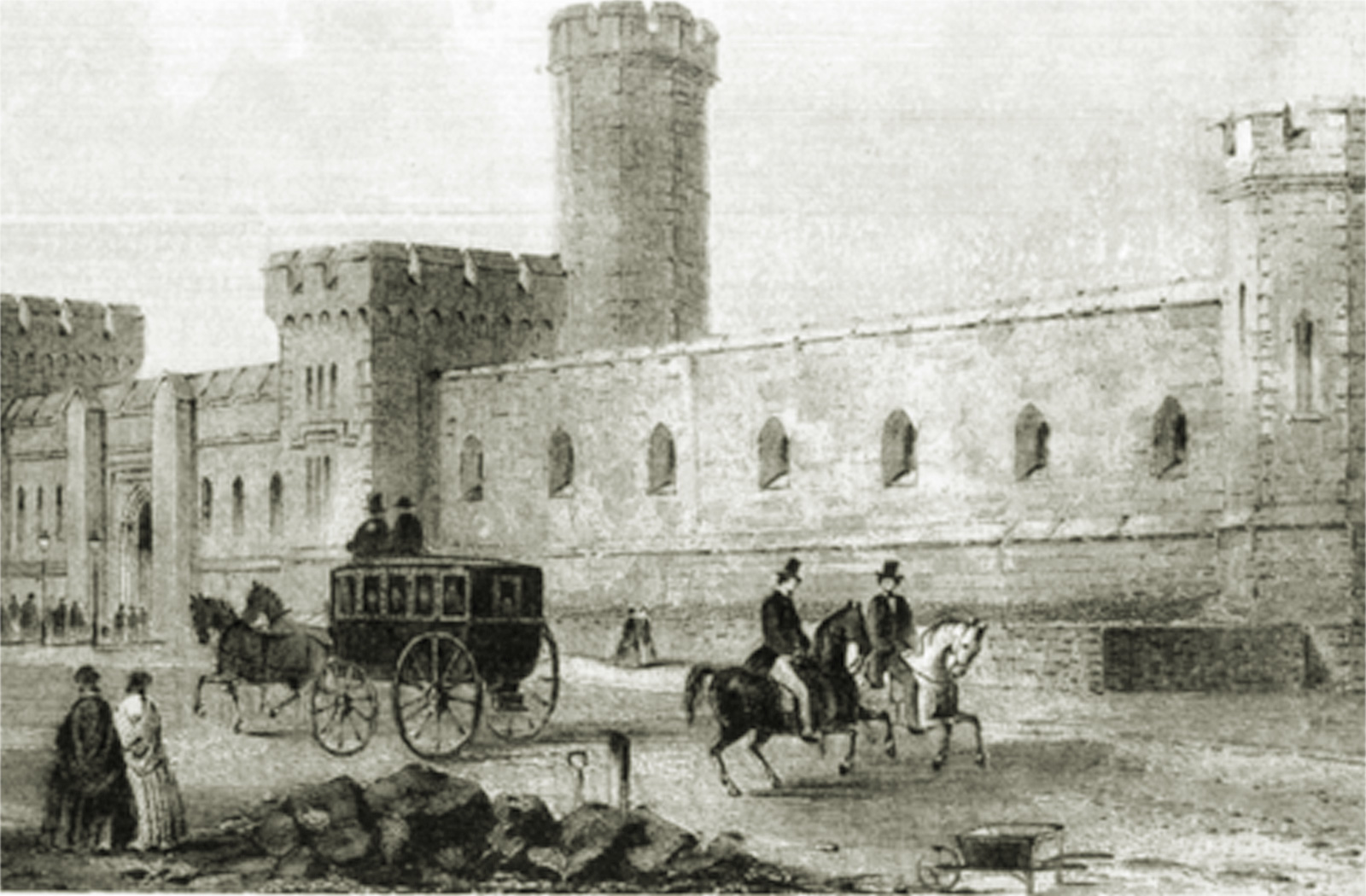
Eastern State Penitentiary was built to start a reformation when it came to America's penal system. Prison was making the move from a place of punishment to a place of reform. Eastern State became the most expensive building in America when it was built in the late 1800s and it was the most famous prison in the world. Al Capone even spent time here. Officers and inmates have reported haunting activity for decades at the prison and this activity seems to have only increased since the penitentiary was closed to inmates for good. The reputation of the prison makes it a perfect place for the haunted house attraction it becomes every Halloween. But the ghosts here are very real. Join us as we explore the history and hauntings of the Eastern State Penitentiary!
The period after the American Revolution was considered a time of Enlightenment in America. Great American thinkers like Thomas Jefferson, John Adams, James Madison, Thomas Paine and Benjamin Franklin were challenging traditional beliefs when it came to religion, science and politics. Six major ideas to come out of the Enlightenment were deism, conservativism, liberalism, toleration, republicanism and scientific progress. The adoption of rational and humanistic principles developed during the Enlightenment affected prison reform and design. As we know from previous podcasts on prisons, many of these institutions were basically large holding pens where all genders and ages were thrown in together. Abuse by prison guards was the norm. With prison reform came changes to the American prison system.
In 1829, the Philadelphia Society for Alleviating the Miseries of Public Prisons opened Eastern State Penitentiary, an experiment in correcting behavior through solitary confinement and reform instead of punishment. The Society began in 1787 and met in the home of Benjamin Franklin. The group was led by Benjamin Rush and he expressed a desire that the group made a goal of having Philadelphia become the place known internationally for prison reform. The group believed that causing prisoners to have penitent hearts would lead to them reforming. That is why this prison was called a pentitentiary. Advocates for the system believed that if inmates were left alone for long enough, away from the dirty outside world, a criminal’s innate morality would prevail and straighten them out. Eastern State was considered the world’s first true penitentiary. Its system of incarceration was considered revolutionary, dubbed the “Pennsylvania System” or separate system. Inmates were held in separate confinement as a form of rehabilitation. The warden was legally required to visit every inmate every day and the overseers were mandated to see each inmate three times a day. Eastern State was designed by John Haviland and opened its doors on October 25, 1829.
Originally, inmates were to be housed in cells that could only be accessed by entering through a small exercise yard attached to the back of the prison. A small portal, just large enough to pass meals, opened onto the cell blocks. This design proved impractical, and in the middle of construction, cells construction was changed to allow prisoners to enter and leave the cell blocks through metal doors that were covered by a heavy wooden door to filter out noise. The halls were designed to have the feel of a church. It was believed by some that the doors were built small, so that prisoners would have a harder time getting out, thus minimizing an attack on a security guard. Others have explained that the small doors forced the prisoners to bow while entering their cell. This design forced the appearance of penance and ties to the religious inspiration of the prisons. The cells were made of concrete with a single glass skylight, representing the “Eye of God”, suggesting to the prisoners that God was always watching them. Fear was a key to instilling in prisoners a desire to never return to jail. Early Prisoners were petty criminals, muggers, purse-snatchers, pickpockets, burglars, etc. First time offenders often only served two years. Eastern State was intended to move the criminal toward spiritual reflection and change and not simply punishment. Proponents of the system believed that the criminals if exposed, in silence, to the thoughts of their behavior and the ugliness of their crimes, would become penitent.
There was an individual area for exercise outside each cell. High walls enclosed each yard so prisoners could not communicate. Exercise time was synchronized so that no two prisoners next to each other would be out at the same time. Prisoners were allowed to garden and to keep pets in their exercise yards. A hood was placed over the head of a prisoner by a guard when he left his cell. This was to prevent the prisoners from recognizing one another. Each individual cell had a faucet with running water over a flush toilet, as well as curved pipes along part of one wall, which served as central heating during the winter months. Hot water would be run through the pipes to keep the cells reasonably heated. Toilets were remotely flushed twice a week by the guards of the cellblock. The original design of the building was for seven one-story cell blocks, but by the time cell block three was completed, the prison was already over capacity.
All subsequent cell blocks had two floors. Toward the end, cell blocks 14 and 15 were hastily built due to overcrowding. They were built and designed by prisoners. Cell block 15 was for the worst behaved prisoners and the guards were gated off from them entirely. Inmates were punished with the “individual-treatment system.” At the time, this form of punishment was thought to be most effective. Due to overcrowding, the solitary confinement system eventually collapsed. By 1913, Eastern State officially abandoned the solitary system and operated as a congregate prison until it closed in 1970. After a riot at Holmesburg Prison in 1971, Eastern State was used briefly to house city inmates. Eastern State was one of the largest public-works in the early days of the United States.
The reality of Eastern State was anything, but reformatory. The guards and councilors designed a variety of physical and psychological torture regimens for various infractions. Prisoners would be doused in freezing water outside during winter months. The Iron Gag was an iron collar strapped around the tongue and chained to the inmate's wrists in a fashion such that struggling against the chains could cause the tongue to tear. Many inmates bled to death during this punishment. Other prisoners were strapped into the Mad Chair with tight leather restraints that prevented any movement and cut off circulation for days on end and given no food. The worst behaved prisoners were put into a pit called “The hole”, which was an underground cell dug under cell block 14 where they would have no light, no human contact, and little food for as long as two weeks at a time.
In the 19th century, Eastern State was a tourist destination. Charles Dickens and Alexis de Tocqueville were two of the most notable visitors. Visitors were able to speak with prisoners in their cells, proving that inmates were not isolated. However, prisoners themselves were not allowed to have any visits from family or friends during their incarceration. In 1831, after visiting Eastern State, Alexis De Tocqueville and Gustave de Beaumont wrote in their report to the French government: "Thrown into solitude... [the prisoner] reflects. Placed alone, in view of his crime, he learns to hate it; and if his soul be not yet surfeited with crime, and thus have lost all taste for any thing better, it is in solitude, where remorse will come to assail him.... Can there be a combination more powerful for reformation than that of a prison which hands over the prisoner to all the trials of solitude, leads him through reflection to remorse, through religion to hope; makes him industrious by the burden of idleness.."
Charles Dickens did not agree. He visited Eastern State in 1842 and in chapter seven of his travel journal, "American Notes for General Circulation," Dickens writes, "In its intention I am well convinced that it is kind, humane, and meant for reformation; but I am persuaded that those who designed this system of Prison Discipline, and those benevolent gentleman who carry it into execution, do not know what it is that they are doing....I hold this slow and daily tampering with the mysteries of the brain to be immeasurably worse than any torture of the body; and because its ghastly signs and tokens are not so palpable to the eye,... and it extorts few cries that human ears can hear; therefore I the more denounce it, as a secret punishment in which slumbering humanity is not roused up to stay."
Some of America’s most notorious criminals were held at Eastern State. Gangster Al Capone found himself in front of a judge for the first time in May 1929 and was sentenced to one year in Eastern State for a concealed weapons charge. He spent most of that sentence in relative comfort. Capone was allowed to furnish his cell with antique furniture, oriental rugs, oil paintings and a cabinet radio. He was allowed special privileges, like being allowed to conduct business through the warden. There was also Morris "The Rabbi" Bolber. He was the leader of an arsenic murder ring. People referred to him as "a veteran witch doctor and compounder of charms." Their main clientele were women who wanted to kill their husbands for insurance money. The group had killed 30 people. The Rabbi was serving a life sentence at Eastern State. Leo Callahan was arrested for assault and battery with intent to kill. He was the only inmate to successfully escape Eastern State and stay at large. He was never recaptured. He used a makeshift wooden ladder to accomplish this feat. The five Buzzard brothers all served time at the prison. Joe Buzzard was one of the best horse thieves in the country. There were women at the prison for 100 years and Freda Frost was the last female at the jail. She had poisoned her husband and killed him.
Bank Robber Slick Willie Sutton was apprehended on February 5, 1934 and sentenced to serve 25 to 50 years in Eastern State, for the machine gun robbery of the Corn Exchange Bank in Philadelphia, Pennsylvania. On April 3, 1945 Sutton was one of 12 convicts who escaped the institution through a tunnel. Sutton was recaptured the same day by Philadelphia police officers; this had been his fifth escape attempt at Eastern State. Willie Sutton claimed to be the mastermind of the tunnel escape. The truth is that the escape was planned and largely executed by Clarence “Kliney” Klinedinst, a plasterer, stone mason, burglar, and forger who looked a little like a young Frank Sinatra and had a reputation as a first-rate prison scavenger. Willie Sutton said, “If you give Kliney two weeks, he could get you Ava Gardner. If you give Kliney a year, he could get you out of prison.”
Like something out of the Shawshank Redemption, the escapees used spoons and flattened cans as shovels and picks, the tunnel crew, who worked in two-man teams for 30 minute shifts, slowly dug a 31-inch opening through the wall of cell 68. They then dug twelve feet straight down into the ground, and another 100 feet out beyond the walls of the prison. They removed dirt by concealing it in their pockets and scattering it in the exercise yard. They shored it up with scaffolding, illuminated, and even ventilated the tunnel. At about the halfway point, it linked up with the prison’s brick sewer system and the crew created a working connection between the two pipelines to deposit their waste while ensuring the noxious fumes were kept out of the tunnel. The tunnel escaped inspection several times thanks to a false panel Kliney treated to match the plaster of the cell and concealed by a metal waste basket.
After months of painfully slow labor, the tunnel was ready. On the the morning of April 3, 1945, the 12 prisoners made their escape, sneaking off to cell 68 on their way to breakfast. After all the designing, carving, digging, and building, Kliney made it a whole three hours before getting caught. He had faired better than Sutton who was free for only three minutes. By the end of the day, half the escapees were returned to prison while the rest were caught within a couple months. The first few escapees to be captured, including Sutton, were put in the Klondikes. The Klondikes were illegal confinement cells that were completely dark and had been secretly built by guards in the mechanical space below one of the cell blocks. These spaces were miserable, tiny holes that weren’t big enough to stand up in or wide enough to lie down. The tunnel itself was analyzed and mapped and then guards filled it with ash and covered it with cement. Until 2005 the location of the tunnel was lost. A non-profit dedicated to preserving the landmarked prison completed an archaeological survey to commemorate the 60th anniversary of the escape. To find the tunnel, the group created a search grid over the prison grounds near the entrance, the location of which was known from old photos. Using ground penetrating radar, the team was able to create vertical sections though the site in increments corresponding to the suspected width of the tunnel. After a couple failed attempts, the archaeologists detected a section of the tunnel that hadn’t collapsed and hadn’t been filled-in by the guards. A year later, a robotic rover was sent through the tunnels, documenting its scaffolding and lighting systems.
Although there were riots in 1919, 1924 and 1923, it was the riot of 1942 they saw the loss of life. All the riots were started due to a lack of quality food and poor conditions and the inmates were demanding better. In 1942, Eastern State instituted a cutback of food items, some of which included sugar and coffee. Because of these reductions, some of the inmates started to protest. During the meal periods, inmates implemented their own form of a hunger strike by refusing to eat anything but coffee. When their demands were not met, mattresses were set afire and the riot began. Because of heavy rain, smoke from the fire was driven down the ventilation shaft to where an inmate named Joseph Anncenski was and asphyxiated him. Two more inmates were overcome by the fire and one was killed during the riot.
By the 1960’s, Eastern State was in very bad shape. The cost of repair was too high and by 1970 the doors were closed. The city of Philadelphia bought Eastern State in 1980 and planned to refurbish and re-purpose the building. That was unsuccessful and the Pennsylvania Prison Society took over the prison in 1994 and opened it for tours. In 1997, it was turned into a museum. Eastern State Penitentiary Historic Site, Inc. took over management in 2001. Every Halloween the prison is opened as a haunted house attraction. Many people believe that Eastern State is Haunted. As early as the 1940’s guards and inmates reported mysterious visions and eerie experiences. The reports have only increased since the closing in 1970.
A locksmith was working in Cell Block #4 to remove a 140-year-old lock from the cell door. He suddenly was overcome by some kind of force that seemed to possess his body. He was unable to move. It was similar to sleep paralysis, only the locksmith had not been sleeping. Legend has it that when the locksmith removed the lock, he opened a gateway for spirits to come through. Almost as if the spirits of the jail had been locked up here. The negative energy pulled the locksmith towards it. He claimed to see hundreds of distorted forms and faces filled with anquish on a cell wall. Every time he recalled the experience, he shuddered.
You might remember that we touched on a haunting involving Al Capone at Eastern State in our St. Valentine's Massacre episode (No. 28) Other inmates said they could hear Capone screaming at somebody named Jimmy in his cell to go away nd leave him alone. He was tormented every night. The prisoners assumed he was talking to the ghost of James Clark, a man who he murdered at the St. Valentine’s Day Massacre in 1929. James Clark was the brother-in-law of Bugs Moran.
Cellblock 12 has disembodied voices that echo through the block and occasionally cackling is heard. On the third floor of that same block, a tour guide claims that the cell doors were closed one minute and then wide open the next minute. Cellblock 6 features several shadowy figures that dart along the walls. Wails, whispers and footsteps are heard in many areas and there is never anyone there to make the sounds. There is a guard tower that has had a shadowy figure visible inside of it on occasion.
Eastern State has seen much pain and loneliness in its time. Are the spirits of former inmates still here in the afterlife? Are there dark and evil entities within the walls of the jail? Is Eastern State Penitentiary haunted? That is for you to decide!
Show Notes:
Mark Nixon/Shadow at the Door Kickstarter: https://www.kickstarter.com/projects/330261639/shadows-at-the-door-an-anthology
Thursday, February 11, 2016
HGB Podcast, Ep. 104 - Andersonville Prison
Moment in Oddity - Cliff Burials of the Igorot People
Suggested by: Laurette Vinson
 |
| Photo by: Laurette Vinson |
 |
| Photo by: Laurette Vinson |
 |
| Photo by: Laurette Vinson |
 |
| Photo by: Laurette Vinson |
 |
| Photo by: Laurette Vinson |
Also found a wonderful article with pictures by Jacob Maentz ,which you can find here: http://www.jacobimages.com/2013/05/igorots-cordilleras
This Day in History - The Visions of Bernadette Soubirous
by: Jessica Bell
On February 11th, in 1858, Bernadette Soubirous saw the first of her 18 "visions" in Lourdes, France. As a young 14-year old girl, Bernadette Soubirous had 18 visions of the Blessed Lady in a grotto in the outskirts of Lourdes from February 11 to July 16, 1858. During a mission to collect firewood, Bernadette stumbled across a grotto that at the time was filled with rubbish washed up from the river. She told her companions that she saw a Lady dressed in white, wearing a white dress, a blue girdle and a yellow rose on each foot, the same color as the chain of her rosary and the beads of the rosary were white. During the ninth apparition, a spring is reported to have miraculously appeared when Bernadette scraped the ground at the instructions of the Blessed Lady. Though many townspeople believed she had indeed been seeing the Holy Virgin, Bernadette's story created a division in her town. Many believed she was telling the truth, while others believed she had a mental illness and demanded she be put in a mental asylum. Some believed Bernadette's visions meant she needed to pray for penance. Bernadette asked the local priest to build a chapel at the site of her visions and the Sanctuary of Our Lady of Lourdes is now one of the major Catholic pilgrimage sites in the world. A few years after her reported visions, Bernadette became a nun and took the name Sister Marie Bernarde. She was later canonized by the Catholic Church.
Andersonville Prison (Research Assistants Jessie Harms and Ann Student, suggested by listener John Beaverhausen)

During February 1864, Camp Sumter was opened in Macon County, Georgia. Camp Sumter came to be known as Andersonville, and that is what it is still referred to as of today. Of all the prisons we have featured on the podcast, Andersonville Prison seems to be the worst thus far. This prison was opened to house Union prisoners during the Civil War and to say that it was overcrowded would be an understatement. The amount of prisoners who lost their lives at this prison reaches into the several thousands. And the prison was not open for very long. These kinds of conditions and numbers of death usually lead to paranormal activity and there seems to be quite a bit of it going on here. Join us as we explore the history and hauntings of Andersonville Prison.
From the beginning of the Civil War until 1862, prisoners were exchanged on the battlefield– a private for a private, a sergeant for a sergeant, and a captain for a captain. Problems arose with this system in 1862, resulting in the creation of large holding pens for prisoners on both sides. Union Army Major General John A. Dix and Confederate Major General Daniel H. Hill met on July 18, 1862 and drafted a cartel providing for the parole and exchange of prisoners. The draft was submitted to and approved by their superiors. The Dix-Hill Cartel, as it became known, was signed and ratified four days later. The cartel failed before the end of the year for various reasons, including the Confederate Government’s refusal to exchange or parole black prisoners. They threatened to treat black prisoners like slaves and execute their white officers. Prisoners were returned to the battlefield too soon, creating another problem. Confederate prisoners from Vicksburg’s surrender on July 4, were paroled and back on the battlefield within weeks.
On October 23, 1862, Secretary of War Edwin M. Stanton directed that all commanders of prison camps be informed that exchanges of prisoners would cease, greatly affecting the large number of prisoners held in northern and southern prison camps. Northern prisoner-of-war camps were: Camp Douglas in Chicago and Johnson’s Island, and Camp Chase in Ohio. Southern prisoner-of war camps were: Libby Prison and Belle Isle in Richmond, and Camp Florence in South Carolina. The two prisons in Richmond were overcrowded by mid-1863. The overcrowding and severe food shortages caused Confederate officials to look for a suitable location far south of Richmond. They selected Captain W. Sidney Winder to find a suitable location in Southwest Georgia. In Milledgeville, Georgia’s capital, Governor Joseph E. Brown introduced him to legislators from southwestern counties in Georgia. Winder traveled to Albany, but property owners discouraged him, he then traveled to Americus, where Uriah Harrold, a Commissary Department purchasing agent, told him about Andersonville, which he claimed had a large supply of good, clear water. Andersonville was five miles west of the Flint River and 1,600 feet east of the Southwestern Railroad’s Andersonville Depot in Sumter County, now part of Macon County. Winder evaluated the area and selected it in mid-December 1863. Construction of the prison was the responsibility of the Quartermaster Department, who chose Richard B. Winder of Maryland to oversee the project.
In January 1864, slaves started digging a ditch and felling trees to construct the prison, that would house 10,000 prisoners. Pine trees were cut 22 feet in length, with five feet set in the ground and seventeen feet above ground. Broad axes were used to make all sides were flat so prisoners could not see outside of the prison. The stockade had two gates, one on the South and one on the North, and 80 sentry boxes at 40 yard intervals. The prison’s interior had a deadline about 19 feet from the stockade wall. Guards were given orders to shoot prisoners who crossed the deadline. The prison was completed in the third week of March.
The first 500 prisoners arrived at Andersonville Prison Camp, also referred to as Camp Sumter, February 25 and put into the unfinished stockade, which had a shortage of equipment and food. Before authorities could get the prison put in order, they were swamped by the unceasing arrival of prisoners, which numbered about 400 every day. There was short supply of food and containers to hold rations, such as plates and cups. Prisoners resorted to using hats or sleeves torn from clothing and tied with string to hold their rations. During March, rations consisted of cornmeal, beans, and occasionally meat. As prisoners continued arriving, food rations diminished.
Prisoners were divided into detachments of 270 men and then subdivided into three companies of 90 men each with a sergeant in charge. The sergeants received the rations and divided them as equally as possible amongst the men. By the end of March, there was only cornmeal and a little salt.
On March 27, 1864, Captain Henry Wirz was placed in charge of the prison. Wirz, who was born in Zurich, Switzerland, in 1823, received some medical training, before his father insisted he enter the mercantile field. Wirz came to America in 1849. He joined the 4th Louisiana Infantry at the beginning of the Civil War and was wounded in the battle of Seven Pines.
By April 1, 1864, the stockade, designed to hold 10,000 prisoners, held 7,160. By May 8, 5,787 more prisoners arrived, 728 prisoners died, 13 escaped, and 7 were recaptured, for a total of 12,213 prisoners in the stockade. Richard Winder made the terrible mistake in locating the prison’s bakery and cookhouse upstream from the prison, which polluted the stream used by the prisoners for drinking and bathing.
Death was caused by contagious diseases, polluted drinking water inside the stockade, inadequate hospital accommodations, lack of prisoner’s quarters, exposure to the elements, bad sanitary practices, short and defective rations, and overcrowding. In order to protect themselves from the elements, prisoners constructed what they called “shebangs.” The huts and lean-tos from logs, limbs shrubs, and brush left in the stockade, as well as blankets, tent flies, overcoats, and clothing from the dead. The Confederates and prisoners made no effort to properly design or lay out streets in the stockade’s interior, so the shebangs went in all directions. The disorganization and lack of proper camp administration probably caused a higher death rate. Prisoner’s letters, diaries, and manuscripts all contained the same subjects: the loneliness, dejection, hopelessness, helplessness, and complete despair.
Lumber and tools ordered to erect barracks and other facilities for the prisoners, was used for buildings outside the prison. Not receiving the lumber not only prevented shelters from being erected it also affected sanitation in the prison. Captain Wirz came up with a good idea to solve the sewage and toilet problem. He planned to build two dams across the stream running through the stockade and flush out the bottom end of the stream daily by opening the dams. If lumber and tools had been available, his idea could have worked. Two squads of 25 prisoners each were supplied with shovels every day and charged with removing all offal from the prison. The combustible part was burned and the rest thrown into the stream.
In May 1864, 708 prisoners died. The prison contained 12,000 prisoners, with at least 500 arriving each day. The stream was a quagmire – one prisoner wrote, “All of the filth from the prison ran into the creek and we had to strain the water through our teeth to keep the maggots out.”
The excessive heat enhanced many types of diseases. There was little chance of escape with 1,200 guards, four pieces of artillery, and a cavalry company.
Men lacking shelter from the weather, developed sores, which in time often turned into gangrene. Disease and sores were spread through lice and thousands of flies swarmed throughout the prison. Killing lice became a game that helped pass the time. The excessive summer heat caused many types of diseases, such as typhus, smallpox, dysentery and diarrhea, to spread through the prison. That summer, more than 100 prisoners died each day. During the winter, many prisoners died from the cold. Authorities were advised to move the hospital outside the prison and supply enough tents for 1,000 patients. When a new hospital was located outside the prison stockade, it only had tents for 800 and by June 1864, there were 1,035 in the hospital and 3,000 sick inside the stockade. Many prisoners were insane, helpless, and entirely naked. One prisoner later wrote, “The sight of all the misery, the starved, dying and half-naked humans all around, those with scurvy misshaped limbs, swollen limbs, swollen joints, and festering sores infected with gangrene, all contributed to make the newcomer so unnerved that he would soon get into a mental condition of despair out of which the ghost beacon of death seemed welcome.” By the end of summer, the crowding was worse and spread of disease increased.
When a prisoner became helpless, gang members, called “Raiders,” would rob him. Over time, the Raiders boldness grew and the robbery victim was sometimes murdered. At the end of June 1864, with the help of Captain Witz, the “Raiders” were identified and removed from the prison for trial. From the opening of the prison up until they were caught, the “Raiders” had robbed, murdered, and in every way made life even more horrible for the prisoners. A trial was held at the end of June 1864. Some of the guilty Raiders were ordered to wear a ball and chain, some were strung up by their thumbs or set in stocks. Six of the leaders were found guilty of murder and were hung on July 11, 1864. A police force, called “The Regulators,” was organized within the prison and headed by “Limber Jim.”
Each day prisoners received a quarter of a loaf of bread, weighing about 6 ounces, and four or five ounces of pork. After rations were disbursed, prisoners tried to trade for something more palatable or for things they needed, such as trading salt for wood or trading wood for beans. Food was constantly on the minds of all the prisoners. They thought about it while awake and dreamt about it at night. Before the end of Summer, prisoners were being served mush for breakfast, mush for dinner, and mush with no salt for supper. As rations decreased, many days prisoners received only a pint of boiled rice with no meat, bread or meal to go with it.
Prisoners took up professions, such as bakers, bucket makers, launderer, and kettle makers to kill time, as well as make money for their needs. Most raw materials were smuggled in since the Confederate guards liked receiving Yankee greenbacks. Prisoners were allowed to receive boxes of food from outside after being carefully inspected and they were allowed to send and receive mail subject to the post commander’s approval. If a box arrived for a prisoner, who had died, it was given to the hospital authorities for distribution.
Prisoners constantly talked of escaping and many attempts were made, such as attempts to tunnel out and running away while outside the stockade on detail. One prisoner pretended to be dead and had two friends carry him out to the dead house. After dark, he got up and ran away. Captain Wirz, suspecting the trick, had a surgeon inspect all dead bodies before releasing them for burial. By the end of summer, many tunnels had been dug and some prisoners were able to escape.Tunnels were found 14 feet deep and from 90 to 100 feet long. Prisoners hoping for a morsel of food would report escape plans to authorities, leading to the capture of men.
Prison life took on a routine, except for tricks played on guards. When a prisoner died, fellow prisoners in his detachment tried to hide the fact he was dead as long as possible, so they could receive his ration. To hide the death from the guards, the sergeant would count many live prisoners two or three times. Also, when a prisoner died, his friend would tie one end of strong piece of cord around the corpse and the other end around himself, to prevent the body from being stolen during the night. Carrying his dead friend to the dead house enabled him to pick up a piece of wood the next day for cooking his food.
On May 21, 1864, the Sumter Republican reported, “The Andersonville prisoners nearly escaped. The commander discovered the plans. At this time, there are 17,000 prisoners there and 500 are being added every day. They cannot be turned loose upon the people. 3,000 to 5,000 men are needed to keep them but there are only 500 men there. Col. Persons is aware of the problem. West Georgia is the Egypt of the Confederacy and the crops must not be destroyed.” By June 17, there were 21,539 prisoners at Andersonville. By the end of June, there were 25,000 prisoners and 7,968 men had been admitted into the hospital.
Many of the prisoners who arrived at Andersonville in April and May, had an abundance of money. The Union armies were reclothed and paid off in Spring 1864 for the spring campaigns. Many of the new recruits and reenlisted veterans had bounty money with them when captured. Prisoners concealed money on their person in many ways. Greenbacks could be pressed inside a brass button, pressed into the sole of a shoe or put into the bowls of large Dutch pipes with a little tobacco sprinkled. Some prisoners swallowed their rings. Gambling was rampant – faro, dice, and $10 stakes were commonly played for. Trade was carried on with guards outside of the wall by talking through cracks and throwing articles over the fence. Captain Wirz allowed sutlers inside the prison walls to sell items to the prisoners. Prisoners with money could buy the necessities of life, such as peas, pones, wheat, flour, and salt, which were very expensive and rapidly ate up the prisoners money. Luxury items such as tobacco, onions, eggs, soda, red pepper, gingerbread, soap, taffy, sour beer, apples, and peaches were also available to those with money. Besides money, various items like gold and silver watches and rings, pocket knives, and mugs and laurel pipe bowls carved from wood, were also exchanged for food.
On July 1, 1864, an addition to the prison was completed, adding another 10 acres to the stockade, which was now 26½ acres. There were 26,367 prisoners in the compound. As prisoners were moved into the newly completed addition, there was a stampede and many prisoners were hurt pressing through the 12-foot opening. The sick, falling down in the press, were trampled and killed; strong men became wedged between the moving mass and standing timbers. A large number of strong and weak prisoners were severely injured and never recovered and an unknown number of prisoners died. By July 21, there were 29,201 prisoners in the stockade and 1,735 in the hospital. On August 4, prisoners took a petition, circulated throughout the stockade, requesting the speedy release of all prisoners from the horrible conditions they were living in, to the proper authorities in Washington, D.C., but nothing was done.
There were many church meetings among the prisoners, with various clergy, two priests, and other Christian prisoner doing the ministering.
During July, Andersonville officials became very concerned. General William T. Sherman’s army was near Atlanta and prison officials were worried that prisoners, fueled by reports from new prisoners, would start a mass uprising. Slaves from surrounding farms were brought in to fell trees and dig additional earthworks in anticipation of a cavalry attack. General Sherman did order two cavalry units to ride south and cut the Macon railroad. He also gave General George Stoneman, who commanded on the units, to advance on Macon itself. General Stoneman planned to free Union officers at Camp Oglethorpe in Macon and then head south to free the 29,000 prisoners at Andersonville. He had 2,500 men and a two-gun battery. He left Atlanta on July 27 at 3:00 a.m. and headed south, followed by 4,000 Confederate cavalrymen. When Stoneman reached Clinton, he was attached by the Georgia militia and in a number of skirmishes his cavalry was defeated. Union soldiers were either killed or taken prisoner, resulting in 500 more prisoners in Andersonville. In August, 2,933 prisoners died, 1,305 were sick in the hospital, and 5,100 were sick in the stockade. During August, the number of prisoners in the stockade was 32,899. Prison conditions were horrendous. Prisoners were dying at a rate of 100 per day. By August 4, there were 33,000 prisoners in the stockade, including 2,208 in the hospital. Holes were dug not only for escape attempts but also to collect water and for warmth from the northern cold. Many holes caved in and suffocated prisoners. The water holes dried up from heat during July and August. So many prisoners died in August, gravediggers were kept busy and the listing of the names of the dead became a 24-hour job.
Six months after opening Andersonville, the authorities finally showed some organization by instituting the “Rules of Andersonville Prison.” In September, the framework for four barracks, housing 270 prisoners each, was completed. As the men started moving into the barracks, two more barracks neared completion. During September, 2,677 prisoners died or 23.3 percent of those confined in Andersonville. Between February, when the prison opened and September 21, 9,479 prisoners had died. Diarrhea had killed 3,530 and dysentery killed 999 for a total of 58.7 percent of the deaths during the first six months of Andersonville’s existence.
Starting in September, some of the healthier prisoners were moved in detachments from Andersonville to Campt Lawton at Millen, Georgia, and to Florence, South Carolina, to help relieve the overcrowded conditions and due to the movement of General Sherman’s army near Atlanta. By September 8, 5,000 prisoners had been moved. By the end of September, the stockade that had held over 30,000 prisoners a few weeks earlier, was nearly empty. The only prisoners remaining were those who could not walk and those who had to work on the outside of the prison to keep it operating. By October, Andersonville no longer received prisoners and only those unable to travel remained. It became a prison hospital housing a high proportion of sick prisoners. Besides the 8,218 prisoners there on October 1, another 444 were added during the month. Of those 8,662 men, 3,913 received treatment in the hospital and 1,560 of those died, 28 escaped, and 2,811 were transferred to other prisons. At the beginning of December, 2,000 prisoners arrived from Salisbury, North Carolina. On December 22, 1864, General Cooper, inspector general of the Confederacy wrote General John Winder that Savannah had been evacuated and suggested that prisoners from Columbia, Salisbury, and Florence be moved immediately to Andersonville, because there was only one road open from Branchville to Augusta. Prisoners once again started arriving daily at Andersonville. At the beginning of January, 197 prisoners died. During January, 4,000-5,000 prisoners arrived daily from other prison camps. Winter 1864-65, was the coldest winter in 25 years in southwest Georgia. One night the temperature was 18 degrees above zero. The prisoners had little clothing and wood they attempted to burn for warmth was too wet. More prisoners arrived at the end of January. February was more pleasant and the prisoners knew that if Sherman had been defeated there would have a larger influx of prisoners, but the only prisoners arriving were from other prisons. As the weather warmed, the prisoners started exercising and began singing patriotic songs. For the first time in 12 months the prisoners were optimistic. Rumors were good rumors – exchange, the end of the war, going home. In March 180 prisoners in Andersonville hospital died. From the guards, prisoners learned the Yankees captured Selma, Alabama, and would arrive soon. The few prisoners that arrived brought good news. On March 25, 800 prisoners left and there was talk that a train would leave every day full of prisoners. On March 28, new prisoners brought word that General Wilson’s Cavalry was on the way. In April the war ended. During the last full month of Andersonville’s existence 28 prisoners died. Most of the prisoners were sent to Vicksburg for exchange. Slowly the prisoners left Andersonville. When Union forces arrived at Andersonville in May, about three weeks after the war ended, only a small number of prisoners remained. Before arrangements could be made to transport the sick and frail soldiers home, one more prisoner died. During Andersonville’s 14 month existance, 12,914 prisoners died at Andersonville.
Hundreds of the prisoners that left Andersonville perished on the way home, when the Sultana, the steamboat they were on, exploded and sank near Memphis, Tennessee. Hundreds more died in northern hospitals or in hometowns from diseases they incurred while prisoners at Andersonville. The human misery reached its zenith at Andersonville and the tombstones in Andersonville National Cemetery and prisoners written words tell a tragic story.
Dorance Atwater and Clara Barton worked together after the closure of the prison to locate and identify prisoners who had died at Andersonville and inform their families. For prisoners who died at Camp Sumter, record keeping was shabby at best. There was great concern that after the war relatives would not be able to locate and identify the bodies of their loved ones. Into this situation stepped one prisoner, Dorence Atwater, of the 2nd New York Cavalry. Sent to Andersonville, Atwater was detailed as a clerk to the surgeon who recorded all the daily deaths. Secretly, Atwater compiled a duplicate list of names and regiments of the deceased, keying them to numbers that were inscribed on the hastily erected posts or boards that were placed over the graves. With the war over, Atwater eventually saw this list of 12,912 names published, thereby enabling proper identification of the graves. He received no reward for his efforts, but Dorence Atwater was a true hero of the Civil War.
After the war, Clara Barton, the “Angel of the Battlefield,” who was famous as a nurse during the war, started receiving letters from family members trying to locate loved ones who did not return home. In an effort to help the families, she started the painstaking research of trying to find the missing soldiers and respond to the family’s inquiries. Dorence Atwater contacted Barton in June 1865, requesting copies of her lists of missing soldiers. Elated, Barton contacted Secretary of War Edwin M. Stanton, requesting permission to accompany the U.S. Army’s expedition to identify graves at Andersonville. While at Andersonville in July and August 1865, Atwater and Barton read the letters she had received from relatives of missing soldiers and searched through the Andersonville Death Register and captured hospital records looking for the missing soldiers. Laborers placed headboards over the dead soldier’s graves in the cemetery. Barton wrote dozens of letters letting family members know their loved ones had died at Andersonville. When the expedition was finished, Barton was given the honor of raising an American flag, for the first time, over the newly established Andersonville National Cemetery.
After leaving Andersonville in 1865, Barton set up the Missing Soldier’s Office in Washington, D.C. She hired numerous clerks, including Dorence Atwater, to answer the more than 60,000 letters she received. By 1867, when the Missing Soldiers Office closed, Barton and her staff had identified more than 20,000 missing soldiers, including the prisoners who died at Andersonville Prison.
Due to her fame as a nurse, Barton received the majority of the credit for the work of the Andersonville expedition and Missing Soldiers Office. While touring the nation, lecturing on the suffering of Andersonville’s prisoners and displaying artifacts she had collected at the prison, Barton was hailed as “Heroine of Andersonville.” The Andersonville Survivor’s Association inducted her as an honorary member and the Andersonville expedition to identify graves became known as Barton’s expedition. She only accompanied the already planned expedition and mainly wrote letters while at Andersonville, but never identify any graves as often claimed.
Her work in the Missing Soldiers Office and support of Dorence Atwater are her greatest contributions to Andersonville’s story. In Fall 1865, Atwater was court-martialed and jailed because of a dispute over ownership of the Andersonville Death Register. Through Barton’s efforts, he was finally released. She also supported his publication of the Death Register. Although, she is often mistakenly given credit for identifying prisoners graves at Andersonville, she deserves a great amount of credit for her efforts to account for missing soldiers at Andersonville and countless battlefields.
With all of this pain and death, it is not surprising that Andersonville Prison has stories about supernatural experiences there. Many of the experiences are sensory, both audible and olfactory. One can image that the scent of several foul things is detected here. The stench comes from inside the prison. Sounds range from gunshots to loud cries, whimpers and whispers from the formerly alive prisoners. Marching has also been heard. EVPs have been collected over the years featuring these cries and distant gun shots.
People claim to feel the sadness and extreme fear that clings to the area as if whomever is still here in the afterlife is continuing to feel torment and despair. Apparitions have been seen walking in the fog that sometimes coats the grounds. They appear as shadows moving in the mist that never seem to truly emerge. Many believe that the Raiders who were hung here for their crimes against their fellows are angry and still walk about the camp as though they still wield some kind of power here. There is also the spirit of Father Whelan who seems to still be here taking care of and comforting the disembodied just as he did when they were all still living.
Many men lost their lives here during a war that split this country and left so many devastated. Emotions of all kinds were high at this time and so it is no wonder that something seems to be carrying over to the afterlife. Are these former prisoners still at the prison? Is Andersonville Prison haunted? That is for you to decide!
Show Notes:
National Park Civil War Series: The Prison Camp at Andersonville, William G. Burnett, Published by Eastern National, 1995
The hauntings at the prison: http://www.ghosteyes.com/andersonville-prison-haunts
Sunday, November 29, 2015
HGB Podcast, Ep. 86 - Pentridge Prison
Moment in Oddity - Sheep Farts Down Plane
Pilots flying a plane from Australia to Malaysia that was full of 2,186 sheep got quite the start when their fire warning went off. The smoke warning indicated that the cargo hold was full of smoke. They made an emergency landing that kept the plane on the ground for 2.5 hours while the fire warning was investigated. No fire was found anywhere. As a matter of fact, there was no indication of any burning or any smoke at all. But there was a lot of sheep manure. And there seemed to be a lot of gas...from the sheep. Apparently, there was so much farting going on by the sheep that it set off the smoke warning. I've heard of a green haze, but this takes the cake. The plane was cleaned and the sheep were loaded up again and the flight continued to its destination. The fact that sheep farts could bring a plane down for an emergency landing is not only hilarious, its downright odd!
This Day in History - Thomas Edison Invents the Phonograph
by Jessica Bell
On this day, November 29th, in 1877, US inventor Thomas Edison demonstrates his hand cranked phonograph for the first time. Edison was trying to improve the telegraph transmitter when he noticed that the movement of the paper tape through the machine produced a noise resembling spoken words when played at a high speed. His original phonograph was a machine that had two needles, one for playback and one for recording. When Edison spoke into the mouthpiece, the vibrations of his voice would be indented onto a tinfoil sheet coated cylinder via the recording needle. The first words recorded by Edison were “Mary had a little lamb." In 1878, Edison established the Edison Speaking Phonograph company to sell the new machine. Edison suggested many uses for the phonograph; such as letter writing and dictation, phonographic books for blind people, music boxes and toys, just to name a few. In 1917, when the US became involved in World War I, the Edison Company created a special model of the phonograph for the US army so that soldiers could take music off to war with them.
Pentridge Prison

Coburg, Victoria, Australia didn't always have that name. It was originally known as Pentridge and it was infamous for being home to the Pentridge Prison. This prison was one of the most notorious in Australia, housing some of the worst of the worst and was open for 146 years. Today, it is the setting for fashion shows, parties, conferences and even weddings. As is the case with many old jails, this one is restless behind the scenes...or should we say, behind the veil. Spirits roam the cell blocks. Come with us as we explore the history and hauntings of Australia's Pentridge Prison!
Coburg, Victoria was originally occupied by the Wurundjeri people of the Kulin Nation. This tribe was spiritually connected to the land upon which they lived and they conducted sacred ceremonies and corroborees there near Merri Creek. Corroboree is the Anglicized version of the Aboriginal word "Caribberie," which is the name given to the singing and dancing ceremonies practiced by the Aboriginies. Not all of these were specifically sacred. Designs were painted on the body that represented the particular ceremony taking place and special costumes and instruments were made. All members of a tribe took part in Corroborees.
Europeans arrived in 1837 to survey the land and the first effort was led by Robert Hoddle. Hoddle marked out a 327 acre area to set up a village. A surveyor named Henry Foot came through in 1840 and he named the village Pentridge after the place where his wife was born: Pentridge, Dorset, England. By 1849, twenty-one farms had been established. It would be the Victorian Gold Rush in the 1850s that would cause the population of Pentridge to really grow. The Victorian Gold Rush followed on the heels of the California Gold Rush. Gold was first discovered in a place known now as Specimen Gully and soon thereafter in Bendigo and Ballarat in Victoria.The gold rush drew men keen to strike it rich, around 500,000 of them. A few claimed getting as much as 96 ounces in one pan, which equals out to about $100,000 today. *Fun fact: 2% of the UK population moved to Victoria in the 1850s.
Some of the prospectors were rough and prone to violence and drink. The population increase led to an increase in crime and the Melbourne Gaol was the closest place to put these characters, but it soon became overcrowded. A spot for a new jail was found in Pentridge about five miles from Melbourne. This gaol was originally known as the Pentridge stockade. It was built in 1851 and officially declared a prison in 1852. The original structure of Pentridge was informal with wooden structures for prisoners to be caged inside. These cages were wheeled so they could be easily transported for labor purposes. Prisoners worked in chain gangs. After deposits of bluestone were found, it became unnecessary to transport the convicts because they could be employed mining the stone right near the jail.
In 1854, "The Crystal Palace" was built over two acres and made of thick hardwood. The walls rose twelve feet high and was considered more secure. Platforms provided a way for guards to keep an eye on all the comings and goings from the prison. It was painted black and food and bedding were sparse for both the guards and the prisoners. Prisoners were kept chained at all times and were forced to sleep in overcrowded and deplorable conditions. Though this new structure was more challenging to escape from, it did not stop prisoners from plotting and planning escape plans.
A local paper reported of the prison, "Upon inquiry as to the condition of the Stockade we found everything just about as complete as could be expected. A man of ordinary strength could push out the weatherboards with a single thrust of his arm. The shingles may be poked off the roof with a stick from the inside. If the flooring boards are lifted, the whole gang could walk out, for the building in on piles some feet from the ground and below the floor is not enclosed...every opportunity is offered to them to run away."
More permanent structures were then built between 1857 and 1864 and bluestone was used to build walls around the property. Colonel William Champ arrived in 1857 and established order in the prison. Champ was a big believer in silence and solitude. This is something we have discussed about other prisons that were run during this same time in previous episodes. Prisoners saw no one except the guards and they were referred to by a number rather than by their name. The prison was broken into different divisions and many of those still stand today. In the early years, panopticons were used to exercise the prisoners. Panopticons were circular and broken up into areas similar to a wagon wheel with a center structure and then stone walled spokes radiating outward. Prisoners were given one hour in one of these wedges in order to exercise. Prisoners were punished with flogging or solitary confinement with only bread and water. Some of the more violent offenders were confined on hulks, which were floating prison boats in a harbor near Williamstown.
Women had their own division, A, until 1871. The three story D Division was built and it housed female prisoners until 1956 when Fairlea Female Prison was opened. Several industries were established in the prison that included a tailors’ shop, blacksmith, woolen mill, carpentry and a timber yard. Moving into more modern times it was known as a place of extreme brutality by the guards. New inmates were subjected to a ritual called the ‘liquorice mile’ where they were beaten naked. Killings amongst the inmates were common with the guard’s only enforcing punishment if the inmates touched one of their own. H ward was reserved for the most brutal, high-risk offenders. But it wouldn't be until the 1950s that the jail became a more humane place.
The jail was open for 146 years and had 3,165 prisoners pass through the doors, with eleven of them being executed. One of those prisoners was Jean Lee and she was the last woman executed in Australia. She had been part of a trio that played something called the Badger Game. It consisted of her enticing a man into meeting her for a rendevouz and once they were in the room, one of her accomplices would come in and pretend to be her outraged husband. They would then blackmail the man. One of these men fought back. They tied him up, tortured him and stabbed him. Jean confessed to the crime, but some thought she was covering for one of her accomplices who was also her lover. On the day of her execution, she completely lost it. She became hysterical and had to be sedated. She fainted when the executioner came in and they had to strap her to a chair to carry her so that she could be hanged.
Other prisoners included Garry David who was a self-mutilator that was incarcerated longer than anyone in the history of the Victorian prison system. He used his time in prison to write threatening letters and cutting off pieces of his body. He cut off 74 of his own body parts including his penis. He died after ingesting razor blades. There were two members of the Pettingill family incarcerated here. They were Denis ‘Mr Death’ Allen, for the rape and murder of 15 people, including the dismembering of a Hells Angel biker with a chainsaw, and his younger brother Victor George Pierce, for drug trafficking. And finally Edward Joseph Leonski who was an American soldier. He served during World War II and killed women during the ‘brownout’ periods of low lighting enforced on the city. People called him the ‘Brownout Strangler’ for this reason. He was hanged at Pentridge in 1942.
Melbourne Gaol was closed in 1929 and its prisoners were relocated to Pentridge. The living prisoners were not the only ones transferred. Unbelievably, 33 prisoners who had been executed at Melbourne were re-interred at Pentridge. One of those bodies belonged to the infamous bushranger Ned Kelly. These 33 bodies joined the bodies of the eleven executed at Pentridge, meaning 44 bodies were buried here at one time. The last prisoner executed at Pentridge was Ronald Ryan in 1967 via hanging. He had shot a police officer during a prison escape. The 1980s saw much unrest within the prison with rioting and drug use running rampant. In May 1997, the northern part of the prison was closed. The southern part was closed in November of that year. In 1999, the jail was sold and developed into housing, parkland and a business precinct. Tours are offered of the prison.
As is the case with so many prisons, the spirits are at unrest at Pentridge Prison. Karen, who was a governor at the prison, relates the following experience:
There is a fog shape that looks like a woman that wonders the prison and dogs react badly to being within the prison after dark. There are also strange sounds which no one can find the source of. Disembodied footsteps are heard as well. No one likes walking around there alone in the dark.
Do the spirits of former prisoners still walk the cell blocks? Is the dark energy that must have permeated these prison walls bringing something from beyond the veil? Is Pentridge Prison haunted? That is for you to decide!
Pilots flying a plane from Australia to Malaysia that was full of 2,186 sheep got quite the start when their fire warning went off. The smoke warning indicated that the cargo hold was full of smoke. They made an emergency landing that kept the plane on the ground for 2.5 hours while the fire warning was investigated. No fire was found anywhere. As a matter of fact, there was no indication of any burning or any smoke at all. But there was a lot of sheep manure. And there seemed to be a lot of gas...from the sheep. Apparently, there was so much farting going on by the sheep that it set off the smoke warning. I've heard of a green haze, but this takes the cake. The plane was cleaned and the sheep were loaded up again and the flight continued to its destination. The fact that sheep farts could bring a plane down for an emergency landing is not only hilarious, its downright odd!
This Day in History - Thomas Edison Invents the Phonograph
by Jessica Bell
On this day, November 29th, in 1877, US inventor Thomas Edison demonstrates his hand cranked phonograph for the first time. Edison was trying to improve the telegraph transmitter when he noticed that the movement of the paper tape through the machine produced a noise resembling spoken words when played at a high speed. His original phonograph was a machine that had two needles, one for playback and one for recording. When Edison spoke into the mouthpiece, the vibrations of his voice would be indented onto a tinfoil sheet coated cylinder via the recording needle. The first words recorded by Edison were “Mary had a little lamb." In 1878, Edison established the Edison Speaking Phonograph company to sell the new machine. Edison suggested many uses for the phonograph; such as letter writing and dictation, phonographic books for blind people, music boxes and toys, just to name a few. In 1917, when the US became involved in World War I, the Edison Company created a special model of the phonograph for the US army so that soldiers could take music off to war with them.
Pentridge Prison

Coburg, Victoria, Australia didn't always have that name. It was originally known as Pentridge and it was infamous for being home to the Pentridge Prison. This prison was one of the most notorious in Australia, housing some of the worst of the worst and was open for 146 years. Today, it is the setting for fashion shows, parties, conferences and even weddings. As is the case with many old jails, this one is restless behind the scenes...or should we say, behind the veil. Spirits roam the cell blocks. Come with us as we explore the history and hauntings of Australia's Pentridge Prison!
Coburg, Victoria was originally occupied by the Wurundjeri people of the Kulin Nation. This tribe was spiritually connected to the land upon which they lived and they conducted sacred ceremonies and corroborees there near Merri Creek. Corroboree is the Anglicized version of the Aboriginal word "Caribberie," which is the name given to the singing and dancing ceremonies practiced by the Aboriginies. Not all of these were specifically sacred. Designs were painted on the body that represented the particular ceremony taking place and special costumes and instruments were made. All members of a tribe took part in Corroborees.
Europeans arrived in 1837 to survey the land and the first effort was led by Robert Hoddle. Hoddle marked out a 327 acre area to set up a village. A surveyor named Henry Foot came through in 1840 and he named the village Pentridge after the place where his wife was born: Pentridge, Dorset, England. By 1849, twenty-one farms had been established. It would be the Victorian Gold Rush in the 1850s that would cause the population of Pentridge to really grow. The Victorian Gold Rush followed on the heels of the California Gold Rush. Gold was first discovered in a place known now as Specimen Gully and soon thereafter in Bendigo and Ballarat in Victoria.The gold rush drew men keen to strike it rich, around 500,000 of them. A few claimed getting as much as 96 ounces in one pan, which equals out to about $100,000 today. *Fun fact: 2% of the UK population moved to Victoria in the 1850s.
Some of the prospectors were rough and prone to violence and drink. The population increase led to an increase in crime and the Melbourne Gaol was the closest place to put these characters, but it soon became overcrowded. A spot for a new jail was found in Pentridge about five miles from Melbourne. This gaol was originally known as the Pentridge stockade. It was built in 1851 and officially declared a prison in 1852. The original structure of Pentridge was informal with wooden structures for prisoners to be caged inside. These cages were wheeled so they could be easily transported for labor purposes. Prisoners worked in chain gangs. After deposits of bluestone were found, it became unnecessary to transport the convicts because they could be employed mining the stone right near the jail.
In 1854, "The Crystal Palace" was built over two acres and made of thick hardwood. The walls rose twelve feet high and was considered more secure. Platforms provided a way for guards to keep an eye on all the comings and goings from the prison. It was painted black and food and bedding were sparse for both the guards and the prisoners. Prisoners were kept chained at all times and were forced to sleep in overcrowded and deplorable conditions. Though this new structure was more challenging to escape from, it did not stop prisoners from plotting and planning escape plans.
A local paper reported of the prison, "Upon inquiry as to the condition of the Stockade we found everything just about as complete as could be expected. A man of ordinary strength could push out the weatherboards with a single thrust of his arm. The shingles may be poked off the roof with a stick from the inside. If the flooring boards are lifted, the whole gang could walk out, for the building in on piles some feet from the ground and below the floor is not enclosed...every opportunity is offered to them to run away."
More permanent structures were then built between 1857 and 1864 and bluestone was used to build walls around the property. Colonel William Champ arrived in 1857 and established order in the prison. Champ was a big believer in silence and solitude. This is something we have discussed about other prisons that were run during this same time in previous episodes. Prisoners saw no one except the guards and they were referred to by a number rather than by their name. The prison was broken into different divisions and many of those still stand today. In the early years, panopticons were used to exercise the prisoners. Panopticons were circular and broken up into areas similar to a wagon wheel with a center structure and then stone walled spokes radiating outward. Prisoners were given one hour in one of these wedges in order to exercise. Prisoners were punished with flogging or solitary confinement with only bread and water. Some of the more violent offenders were confined on hulks, which were floating prison boats in a harbor near Williamstown.
Women had their own division, A, until 1871. The three story D Division was built and it housed female prisoners until 1956 when Fairlea Female Prison was opened. Several industries were established in the prison that included a tailors’ shop, blacksmith, woolen mill, carpentry and a timber yard. Moving into more modern times it was known as a place of extreme brutality by the guards. New inmates were subjected to a ritual called the ‘liquorice mile’ where they were beaten naked. Killings amongst the inmates were common with the guard’s only enforcing punishment if the inmates touched one of their own. H ward was reserved for the most brutal, high-risk offenders. But it wouldn't be until the 1950s that the jail became a more humane place.
The jail was open for 146 years and had 3,165 prisoners pass through the doors, with eleven of them being executed. One of those prisoners was Jean Lee and she was the last woman executed in Australia. She had been part of a trio that played something called the Badger Game. It consisted of her enticing a man into meeting her for a rendevouz and once they were in the room, one of her accomplices would come in and pretend to be her outraged husband. They would then blackmail the man. One of these men fought back. They tied him up, tortured him and stabbed him. Jean confessed to the crime, but some thought she was covering for one of her accomplices who was also her lover. On the day of her execution, she completely lost it. She became hysterical and had to be sedated. She fainted when the executioner came in and they had to strap her to a chair to carry her so that she could be hanged.
Other prisoners included Garry David who was a self-mutilator that was incarcerated longer than anyone in the history of the Victorian prison system. He used his time in prison to write threatening letters and cutting off pieces of his body. He cut off 74 of his own body parts including his penis. He died after ingesting razor blades. There were two members of the Pettingill family incarcerated here. They were Denis ‘Mr Death’ Allen, for the rape and murder of 15 people, including the dismembering of a Hells Angel biker with a chainsaw, and his younger brother Victor George Pierce, for drug trafficking. And finally Edward Joseph Leonski who was an American soldier. He served during World War II and killed women during the ‘brownout’ periods of low lighting enforced on the city. People called him the ‘Brownout Strangler’ for this reason. He was hanged at Pentridge in 1942.
Melbourne Gaol was closed in 1929 and its prisoners were relocated to Pentridge. The living prisoners were not the only ones transferred. Unbelievably, 33 prisoners who had been executed at Melbourne were re-interred at Pentridge. One of those bodies belonged to the infamous bushranger Ned Kelly. These 33 bodies joined the bodies of the eleven executed at Pentridge, meaning 44 bodies were buried here at one time. The last prisoner executed at Pentridge was Ronald Ryan in 1967 via hanging. He had shot a police officer during a prison escape. The 1980s saw much unrest within the prison with rioting and drug use running rampant. In May 1997, the northern part of the prison was closed. The southern part was closed in November of that year. In 1999, the jail was sold and developed into housing, parkland and a business precinct. Tours are offered of the prison.
As is the case with so many prisons, the spirits are at unrest at Pentridge Prison. Karen, who was a governor at the prison, relates the following experience:
"I worked in the Victorian Prison Service, Australia for 16 years. I began my career at HM Pentridge Prison, Coburg Victoria. The site, now partially torn down, was home to 1,200 male and female prisoners at any one time. This encounter took place in "D" Division, originally constructed for female prisoners in 1880 but was currently the remand facility for 320 maximum security male prisoners.The ghost of Mark ‘Chopper’ Read is said to have started haunting the jail after his death in 2013 from liver failure. Mark Read was an underworld hitman and participated in a number of violent crimes leading him to be imprisoned for most of his adult life. He also wrote a number of books based on his life as a criminal. He has been seen near his old block in D Division and has been heard cussing at those participating in ghost tours. He sometimes leans against a wall with his arms crossed and other times he is standing and smoking a cigarette. The Lantern Tour Group was hosting a tour one night when something incredible happened. A spine-chilling shout echoed down the bluestone walls. It was the voice of a male screaming, “GET OUT!” The tour counted its number to make sure one of them hadn't broken off to play a prank. Another scream echoed down the corridor and this time it bellowed, GET THE F--- OUT!” The yell came from near cell 16, which had been Chopper's cell. The Lantern Ghost Tours group were hurried outside and the managers called police.
One night, a young male prisoner had slashed his wrists and arms in a suicide attempt. He had lost a life threatening amount of blood and six of us were desperately trying to stem the flow while waiting for the mobile intesive care ambulance to arrive. At one point, the Senior Prison Officer requested that I run out of the infirmary, up a shot landing to call 000 ( your eqivalent of 911) to get an ETA on the ambulance.
As I ran up the stairs I hit what felt like an ice wall and was momentarily stopped in my tracks. The air around me became instantly chilled, and although this was in the middle of summer, I was cold and could see my breath. I was then able to get up the last six steps, but when I turned around, I saw an opalescent fog crystalise into the form of a woman. She wore long skirts, a cap on her head, and when she turned her face towards me, I got the impression of a woman old before her time, with uncountable horrors and sorrows written in the depth of her staling blue eyes. She then vanished and the air around me returned to its warm and humid state.
I have never forgotten her face, and that 5-10 second interlude meant that I hadn't called and annoyed the Ambulance service, as the sound of the siren was heard as the image vanished.
I went in search of files and possible photographs to try and find this restless soul. I now have it narrowed down to three possible women, all transported from England, all of Irish extraction, all for 7 to 14 years hard labour for crimes such as stealing 1 shilling's worth of bread.
She saved me from annoying an already busy emergency service, and made me accutely aware of how much of us we leave behind for other people to learn from."
There is a fog shape that looks like a woman that wonders the prison and dogs react badly to being within the prison after dark. There are also strange sounds which no one can find the source of. Disembodied footsteps are heard as well. No one likes walking around there alone in the dark.
Do the spirits of former prisoners still walk the cell blocks? Is the dark energy that must have permeated these prison walls bringing something from beyond the veil? Is Pentridge Prison haunted? That is for you to decide!
Subscribe to:
Posts (Atom)