Showing posts with label Haunted Oklahoma. Show all posts

Thursday, July 10, 2025

HGB Ep. 594 - Haunted Tulsa

Moment in Oddity - Queen Victoria Burial Requests

We love the Victorian era so, of course, we gotta love the Queen for who it was named, Queen Victoria. Something that we really love about her is how much effort she put into her funeral and burial. This was a woman with a plan. A twelve page plan! First, she had a list of things she wanted to accompany her in the coffin. These items included: 
A plaster cast of Prince Albert's hand. The Queen had actually slept with this every night after his death in 1861.
A photograph of John Brown.
A cape made by her daughter Alice for Prince Albert.
Her wedding veil and rings.
As much jewelry as could be placed on her, including rings on every finger and bracelets on her wrists.
A bouquet of Scottish heather.
Albert's dressing gown.
Casts of her children's hands.
A lock of John Brown's hair and his mother's wedding ring. These were controversial items that the family didn't know about because they were probably part of a secret list given to her doctor and dresser. The doctor took pains to hide the fact that the ring was on her wedding finger. Did this indicate that she had married John Brown?
Queen Victoria requested that she not lie in state. She didn't want any black. Nobody should wear any black and she wanted a white pall on her coffin. The Queen was a soldier's daughter, so she wanted a military funeral. She was buried wearing a white satin dress and her wedding veil. Her death left the world and her country in a bit of shock even though she was 81 at the time, but for us the real shock is just how meticulous and planned she was in regards to her burial and her requests were certainly odd.  

This Month in History - Tour de France Begins

In the month of July, on the 1st, in 1903, the first Tour de France started. The Tour de France is a bicycle race that runs through multiple stages over multiple weeks in the country of France. Every year features a different route, but the typical modern day route runs over 2200 miles and goes through 21 stages over three weeks. The first race ran through six stages that were very long, typically 250 miles each. Today's stages are a little over 100 miles. There were one to three rest days between each stage and the route was relatively flat. Cyclists raced solo, so there were no teams like the modern race. The leader after a stage was run would wear a green armband, rather than today's yellow shirt. Cyclists got paid at the end of each stage if they were one of the fastest eight cyclists of the stage. If a cyclist gave up before finishing a stage, he could still ride in a stage the next day. This 1903 race had 60 cyclists and only 21 would complete all six stages. Maurice Garin was the winner, sealing the greatest margin of victory that there would ever be in the Tour de France. He won by 2 hours 59 minutes 31 seconds. He won 6,075 francs and used that to buy a gas station where worked for the rest of his life. 

Haunted Tulsa 

Tulsa is a thriving city with a diverse cultural and arts scene, but it wasn't always that way. The city suffered through the 1921 Tulsa Race Massacre. The area was settled by the Creek Nation after they were removed from their ancestral homes in Alabama and Georgia and Tulsa eventually became an oil boomtown. The history here has led to hauntings in many locations and we are joined by Teri French of Tulsa Spirit Tours to explore the history and hauntings of Tulsa, Oklahoma.

Teri French is the owner and operator of Tulsa Spirit Tours, which has been hosting tours in Tulsa, Oklahoma for 22 years. This was the first of its kind in Oklahoma. Teri also founded the Paranormal Investigation Team of Tulsa, P.I.T.T., in 1999 and she has written the books "Tulsa's Haunted Memories," "100 Things To Do in Tulsa Before Your Die" and "100 Things To Do in Oklahoma Before You Die." She joins us on this episode. 

Kelly: Tulsa is often referred to as "Green Country." Why is that? 

As most people know, Oklahoma became the final stop for many Native American tribes after the Indian Removal Act was passed in 1830. What would eventually become Tulsa was settled by the Five Civilized tribes:  Choctaw, Cherokee, Muscogee (Creek), Chickasaw, and Seminole. The Turtle Clan of the Creek specifically founded Tulsa , calling it Tulasi in their native tongue meaning "old town." Tallahassee also gets its name from this word. There is a Washington Irving Park here because the writer visited in 1832. The first non Native home built here was a log cabin by Lewis Perryman in 1846. He and other settlers called the place Tulsey Town. Railroads and the oil boom would build Tulsa into the town it is today. Despite its success, Tulsa had a dark side. Teri shares with us a bit about the founders of Tulsa and the degradation of race relations that blew up into the Tulsa Race Massacre of 1921.

Kelly: Teri, can you share a little about the history of Tulsa? 

Tulsa Theater

This theater started as Convention Hall and was built by the city of Tulsa between 1912 and 1914 at a cost of $125,000. The theater was designed by architects Rose and Peterson out of Kansas City. This was the largest hall between Kansas City and Houston, Texas at the time. Opera performances were popular here with the most celebrated in October 1916 being Georges Bizet's (zhorzh buh zay) Carmen starring Mary Garden. The building remained Convention Hall until 1952 when it became Tulsa Municipal Theater. In 1979, the theater changed its name to Brady Theater and ran as that until 2019. Today, it is known as Tulsa Theater. One of the well known performers here has a legend and haunting connected to him, Italian opera singer Enrico Caruso. He performed there in 1920 and reportedly caught the cold that led to his death of pleurisy in 1921. Teri French told 2 News Oklahoma, "He wanted to see the oil wells and how they made them. And as they came back, it was raining. It was cold, miserable, and the car broke down. He had a great performance, according to history. It was one of his best. Standing ovations and the whole nine yards." Many blame Tulsa for his death and believe his spirit returned to the theater to haunt it. Another reason for hauntings here is that victims of the 1921 Tulsa Race Massacre were brought inside the theater. 

Tulsa Little Theater

This theater was built in 1932. There were fires in 1965 and 1966. The theater was renovated in 2004 and this seems to have sparked paranormal activity. The Law Office of Bryce A. Hill bought the Tulsa Little Theatre, and renovated it, while keeping everything as original as possible to the point of when it was built in 1932 and is now using the Front building as their Law Office’s. They called Teri French to come in and investigate. Some of that weird stuff included disembodied footsteps going across the ceiling. Sandbags in the main stage area will sway back and forth and since they are heavy, that definitely doesn't seem to be something that could happen without some amount of force. PITT hosted an event there in 2005.

Cain's Ballroom

French has said, "I think it was in the 40s and 50s when it was considered a rowdy roadhouse. It was actually in the Tulsa World that some of the toughest gang fights occurred right outside the Cain’s Ballroom door." That may be why this location is haunted. 

The Cave House

Kelly: The Cave House is one of the strangest pieces of architecture we have ever seen. This started out as a simple chicken restaurant in the 1920s, but there was something else going on there too. Can you tell us about this? 

Gilcrease House

The Thomas Gilcrease Institute of American History and Art is also known as Gilcrease Museum and houses a wide variety of historical items and art. The building was made from sandstone. It is said to be the most haunted location in Tulsa. French said of this location, "Cameras would fail. Cell phones would shut off or wouldn’t work. It was just weird. We never turned the bus off because we were afraid, at one point, we wouldn’t be able to get it started...So, a couple of years back, they installed a bunch of new security cameras and they kept going off in the south bedroom one evening. Tulsa police were called, and they came out with trained police dogs where they tried to go up the stairs. The dogs absolutely refused to go up. They started whimpering and wouldn’t budge. They ran out of the house. And when the police went up there by themselves, not a living soul was there." The spirit here is thought to be Thomas Gilcrease and he doesn't seem to like visitors. 

The Hex House

Who doesn't love a haunted attraction that is inspired by an actual true story, particularly one that is thought to be one of the best in the country? This might be the case with the Hex House. The original Hex House was located at 10 East 21st Street and was owned by Carolann Smith. This location is a parking lot now that has been for sale for a long time. It doesn’t seem like anyone wants to buy it. Rumors claim that the basement still exists under the parking lot. The attraction is housed in a store front at Town West Shopping Center at 5610 W. Skelly Drive. The story was related by Gene Curtis in "The Tulsa World" in 2007, "A 1944 investigation by police revealed a small casket buried in the backyard of a Tulsa house and two young women who had been under hypnotic or occult control for seven years.

The probe was nicknamed the "Hex House" case because police and reporters thought it had all the spooky elements of a Halloween story -- bondage, spell-casting, mesmerism, hypnotism. But this case was real, not a Halloween tale, and led to a short prison term for Carolann Smith, 45, and freedom for the two young women, Nell Willetta Horner, 30, and Virginia Evans, 31, who had been forced to live in an unheated basement of the house at 10 E. 21st St. and to turn over their paychecks to Smith. The young women told authorities they had been led to believe they would receive a great reward in heaven, called the "big payoff," for serving Smith, who apparently had devised a religion of her own. Horner told police that Smith had starved and beat her under the guise of religious purification." The investigation was touched off when Smith obtained eight World War II ration books for herself, the two young women, several fictitious names and for a daughter, Bonnie, that actually was her dog, BonBon. Neighborhood children told Alice Allen, a teacher at Lee Elementary School, where ration books were issued, that there was no Bonnie but that Smith had a dog named BonBon. They also knew that Smith and the two young women had buried a casket in the backyard in the middle of the night. When police investigated, they discovered Horner and Evans living either in the basement or in the servant's quarters and sleeping on orange crates without blankets while Smith lived in luxury. They found 45 pairs of expensive women's shoes, many of them unworn, silverware and glassware, clothing, jewelry, expensive furniture, 18 pairs of new gloves and cash.

Meanwhile, the young women wore tattered dresses to their jobs and had no cosmetics, although Smith had "enough to stock a drug store." The hundreds of beauty items and perfumes were kept in her bedroom. When they dug up the back yard, police first found a dog's carcass buried in a cardboard box and underneath that a small casket containing the carcass of BonBon that had been buried 5 feet deep. Books dealing with the means of developing will power, magnetism and self-mastery of fate were found in Smith's house. They also found writings by her that dealt with the means by which the human mind could be affected and about witchcraft and magic. When the case got to court, it was something less than the sensational and lurid case observers expected, but it was still puzzling. The big question, of course, was how did Smith control the two young women? Horner testified she always followed Smith's orders. She said she was told in 1940 to have nothing to do with her family and that from then on her last name was Sherman. She assumed that she had been adopted by Smith, who sometimes used the last name Sherman. Evans testified that "we thought she was leading us into a good life." "She always quoted Scriptures to bring out her point," she said. "They fitted in perfectly with what she wanted us to do."

In addition to receiving the paychecks of the two young women, Smith also received $31 a week from Evans' father for her support and extra money to pay for a nurse. She had written him that Evans was mentally ill and needed a nurse that would cost that amount. A District Court jury found Smith guilty of suborning (inducing) perjury and sentenced her to a year in prison. She pleaded guilty in federal court to a charge of using the mail to defraud Evans's father, a wealthy Stroud merchant, and making false claims to obtain ration books. She was placed on probation for the latter crimes. The subornation charge stemmed from a Municipal Court case in which Evans and Horner testified against a neighbor who lived in the adjoining duplex of the house. He was charged with assaulting Horner. Horner said she and Evans were told exactly what to say in their testimony and that they were rehearsed for hours. She finally typed a script and memorized it, she said.

From the Haunted Attic website, "As Carolyn engaged in rituals to communicate with the spirits of her lost children, the house became a focal point of dark energy. The once-proud home fell into despair, the walls adorned with strange symbols and the yard littered with trinkets and offerings from those seeking to break the curse. Visitors reported feeling an oppressive energy surrounding the house, with many claiming to see apparitions of the children playing in the yard or hearing their laughter reverberating through the halls. The legend of the Hex House gained interest from paranormal enthusiasts and ghost hunters. In 1998, a team of paranormal investigators conducted a series of investigations of the grounds of the former Hex House capturing photographs of orbs (spectral energy) and recordings of unexplained sounds, including disembodied voices. Their findings only solidified the house’s reputation as a haunted location, transforming it into a popular destination for thrill-seekers and the curious alike." 

The "Hex House" was a favorite site for young Tulsans to visit on Halloween for years after the case was settled. But the house was torn down in 1975 and the site became the parking lot for the Akdar Shrine. The Shrine later moved to 27th Street and Sheridan Road and its old site -- where the Hex House had been -- became the site of apartments.

Kelly: Do you have a favorite haunted location? 

Tulsa seems to have several haunted locations in the town. Are these places haunted? That is for you to decide! 

Wednesday, February 3, 2016

HGB Podcast, Ep.102 - Skirvin Hotel

Moment in Oddity - Phantom Time Hypothesis

Heribert Illig believes that much of what we know about the Middle Ages is just made up and he calls his theory the Phantom Time Hypothesis. Illig is a German historical conspiracy theorist that believes the Early Middle Ages dating from 614-911 was fabricated through alterations, misrepresentations and downright forgery and that Charlemane himself never existed. Part of the evidence he points to is the fact that Romanesque architecture is seen in the tenth century, so only half a millennium could have passed since the fall of the Roman Empire. He also points to the lack of archaelogical evidence. Who did this and why according to Illig? The Holy Roman Emperor Otto III, Pope Sylvester II, and the Byzantine Emperor Constantine VII, instigated the alterations and they did it so the Anno Domini dating system placed them at the special year of AD 1000. Let's not ignore the fact that more than Europe's history would have to be altered to support Phantom Time. The Papacy history and Islamic history would need changing too as well as many other regions, including Asia, whose Tang Dynasty observations on solar happenings like Halley's Comet are current and match the calendar without Phantom Time. Romanesque styling still makes its way into architecture to this day. So does the history we tell you about on this podcast really exist? How about what Dan Carlin is talking about on Hardcore History? Stuff You Missed in History Class is probably just made up too. Perhaps the time you are in right this very minute doesn't exist. This is all just a figment of your imagination. A big ball of Phantom Time. Now that, certainly is odd!

This Day in History - Prince Mutsuhito becomes Emperor Meiji of Japan
by: Jessica Bell

On this day, February 3rd, in 1867, Prince Mutsuhito becomes Emperor Meiji of Japan at the age of fourteen. Emperor Mutsuhito adopted the reign-name Meiji (meaning enlightened government) and ruled in that name from 1868 to 1912. Emperor Meiji presided over a time of rapid change in Japan, as the nation rose from a feudal shogunate to become a world power. He supported the growing popular consensus on the need for modernization of Japan along Western lines that had developed as a result of the country’s resumption of contact with other nations after a 250-year period of cultural and economic isolation. The restoration of the emperor as sole ruler of a unified Japan came to be known as the Meiji Restoration. Emperor Meiji's advisers believed that the strength of Western nations depended on constitutional government for national unity, on industrialization for material strength, and on a powerful and well-trained military for national security. Most Japanese took to Western technology with enthusiasm. Between 1868 and 1885, Japan acquired postal services, a telegraph system, railways, banks, and steam-powered overseas shipping lines. Universal education was introduced during the Meiji era, which was intended to produce a high level of literacy and knowledge of science, and to infuse children with traditional morality and virtue.

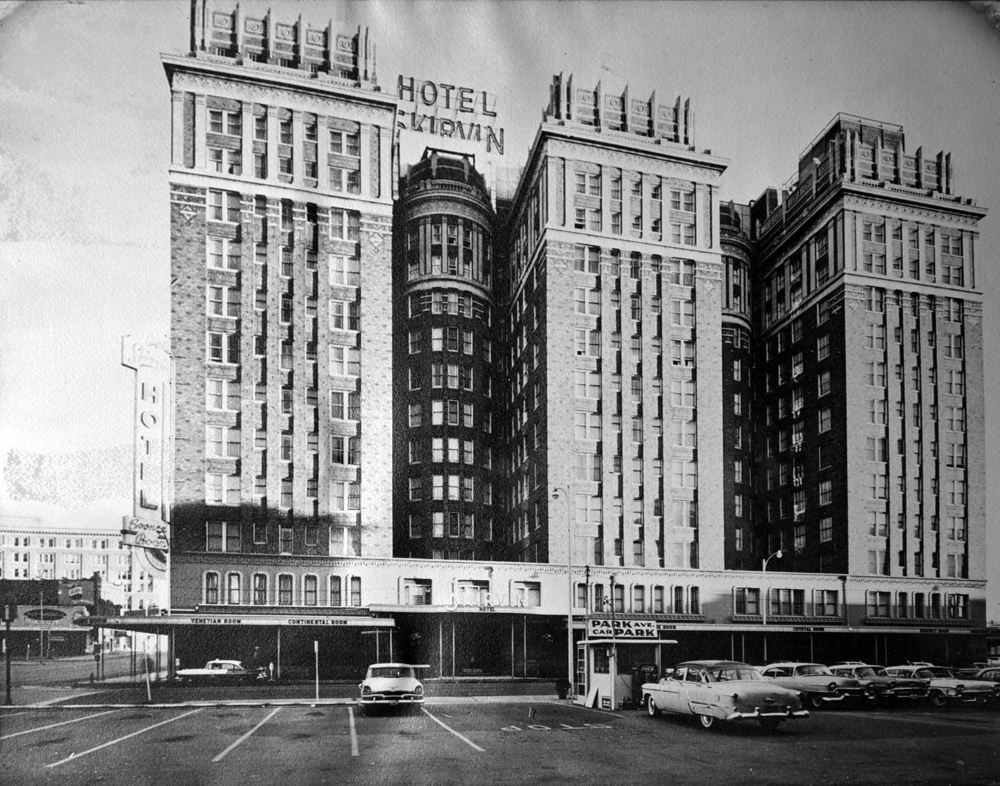
Skirvin Hotel (Research Assistant April Rogers-Krick)


Westward expansion was pulling people from the east into the wild west. Oklahoma City was a boom town from 1898 to 1909 and many people flocked there. William Skirvin was one of those people who came to Oklahoma City and he built a hotel that has survived into today. The Skirvin Hotel was meant to be the most grandiose and fancy hotel in the area. And it was, hosting some of the luminaries of the day. For a time it was abandoned, but today, it is a property of Hilton and still hosting guests from around the world. But the Skirvin Hotel seems to be hosting more than just the living. This hotel is considered by some as the most haunted location in Oklahoma. Join us as we explore the history and hauntings of the Skirvin Hotel.

The 1830s saw things changing drastically for the Native American people. President Andrew Jackson's first major piece of legislation was the Indian Removal Act of 1830. This allowed the government to evict the Native Americans east of the Mississippi River from the lands they were living upon. Most people are familiar with the Trail of Tears. This was the route that these evicted Native Americans followed into what was deemed Indian Territory in the West. Five main tribes were affected and these tribes were the Cherokee, Chickasaw, Choctaw, Muskogee and the Seminole. They are referred to as the Five Civilized Tribes. The reason for this name is that Native Americans had been encouraged to learn to read and speak English and convert to Christianity and these five tribes adopted those customs deeming them as civilized to the White Americans.The journey on the Trail of Tears was difficult and deadly. It ended in Oklahoma, which was known as Indian Territory. Listeners might recall us referring to Oklahoma with this name in the last episode about the 101 Ranch.

The Western part of Oklahoma was considered "Unassigned Land" and so many pioneers decided to settle in that area, which included Oklahoma City. These pioneers were called Boomers and the government was not happy with them basically squatting on this land, so it held a series of land runs so these pioneers could claim land. A land run is when the government opens up previously restricted land to homesteading. The way the land is claimed is first come first served basically. The Boomers were not necessarily wrong with what they were doing because the Homestead Act of 1862 stated that settlers could claim 160 acres of public land and they considered Western Oklahoma to be public land. After the land run was announced, some settlers tried to stake their claim to the land before it was legal and this group was called the Sooners. *Fun fact: The University of Oklahoma used Boomers as its mascot before changing to Sooners.*

Oklahoma became a state in 1907, shortly after the land runs. Guthrie was the territorial capital, but in 1910 Oklahoma City, which was incorporated in 1890, was declared the capital. Oklahoma City was oil rich and this brought about the oil boom, which brought many people to the city. Many of these oil men would bring about other business and trade for the city

The Skirvin Hilton was originally named the Skirvin Hotel. This is the oldest hotel in Oklahoma City. The name Skirvin came from its founder William Balser Skirvin, known as W.B. It was Skirvin's desire to build a high class hotel that would be considered the finest accommodations in the area. Skirvin was born on November 10, 1860 in Michigan near Sturgis. He grew up on the family farm there. Skirvin's mother died when he was eight and his father left for business, leaving Skirvin and his sister in the care of their grandmother. He lived with her until he was fifteen and then he set off on his own, finally ending up in Kansas selling farm machinery.

Skirvin later got into real estate and when the Oklahoma Territory opened up, he and a partner went in and bought property in Guthrie. He later moved his family, which included two daughters and a son to Galveston, Texas. He survived the hurricane that all but wiped out Galveston in 1900. Six thousand people lost their lives in that storm and one of those people was nearly Skirvin, who risked his life several times to save others. After losing his home in the storm, he got involved in the oil business. This made him a rich man. He relocated to a growing city in Oklahoma named Oklahoma City in 1906. He again pursued real estate and then set his focus on building a hotel. Before that happened, his wife passed away in 1908. He would never remarry, but rumors would arise later that he carried on a relationship with a maid at the hotel he would soon build. The real truth is that he probably had a relationship with his bookkeeper Mabel Luty, but she outlived him.

Construction began on the Skirvin Hotel in 1910 at the corner of First Street and Broadway in Oklahoma City. The architects were Solomon Layton, Hicks & Forsyth and Kahler Slater. Two ten story towers were built with 225 rooms. In 1926, a third tower was added that rose to thirteen stories. In 1930, all three towers were raised to fourteen stories to make them all level. The hotel had a total of 525 rooms after that expansion. The lobby's floor was originally laid with white tile, but in later years carpet covered over the tiles. A newspaper ad in The Daily Oklahoman dated from Sunday October 1st, 1911 for the opening reads:
"The Skirvin Hotel which has just opened its doors to the public at Oklahoma City is the best hotel in the Southwest and the most modern in all hoteldom. A sterling hospitality that is unrivalled in its warmth and sincerity radiates everywhere from this splendidly equipped hotel. The Skirvin Hotel is complete in every detail and absolutely fireproof. The rates are as moderate as will be found anywhere.
 The Skirvin Hotel is ten stoires in height, of pleasing architecture and contains 225 rooms, each with an individual private bath. The lobby of the Skirvin is of English Gothic and furnishes the motif for the decorations and furnishings throughout the interior of the hotel. A comfortable, homelike atmosphere prevails everywhere which first impresses you with its kindly warmth the moment you enter the lobby. The hotel has two large entrances, one from Broadway and the other from First Street. Courteous employees are quick to anticipate your wants and to fill them promptly and quietly.
(Writing really tiny here so hard to see.) Convention Hall, Banquet Room and the Mezzanine Floor are furnished and [can't read] luxurious style. The [can't read] lighting system is used. The Grill Room in the basement and the Cafe on the first floor are sumptuously furnished and [can't read the rest.]
Afternoon tea will be served in the tea room, which adjoins the mazzanine floor. The Tea Room has been daintily decorated by hand in delicate designs and will be the afternoon rendevouz for fashionable people from all over the state. Special care is provided for unaccompanied women and children and a maid attends to their every want and comfort with constant attention.
There is not a more modern kitchen anywhere than that which serves the excellent meals provided at the Skirvin. Everything is snowy white. Absolute cleanliness prevails to the last degree. All the tables, shelving, etc are of white [can't read] metal. Here, as in the cafe, is a superb ventilation system and the cold storage is the latest design. A capable chef is in charge of a corps of seasoned experts who have reduced cooking to a known science.
Mr. Frederick W. Scherubel, general manager of the Skirvin Hotel, has a wide acquaintance with and knowledge of the needs of the travelling public of the Southwest and in this hotel has met their every requirement. No better host nor hotel can be found anywhere."
Peggy Wullich, a desk clerk in the 1940s, said of her experience at the hotel, "It was great working the at Skirvin. I was there when Bob Hope came. It was an elegant place — overstuffed chairs, guests sitting in the lobby, reading the paper. I also danced for Katherine Duffy at WKY in the Skirvin Tower. A lot of people from New York would come in for showings of clothes, and I would model for them. The Skirvin was more elite than the other hotels. The Biltmore was good, but it just didn't compare to the Skirvin.”

Skirvin's daughter was Perle Mesta. She was the American Ambassador to Luxembourg. She was dubbed "the hostest with the mostest" because she hosted the best and most lavish parties in Washington, D.C. for dignitaries. An invitation to one of her parties meant that one had truly arrived and was now a part of the inner circle. Irving Berlin's musical "Call Me Madam" is about Mesta. 

On March 12, 1944, Skirvin was in a severe car accident and sustained several life threatening injuries. He lingered until March 25th and then passed away from his injuries. His necrology was written by Fred P. Branson and ends with "It can justly be said that he was one of the outstanding stalwart citizens of Oklahoma, his adopted State, and his efforts produced marks of progress, which are now, and will continue to be for a long number of years, not only useful institutions, but monuments to his efforts and name."

Dan James, a hotelier, bought the hotel from Skirvin's children after his death. He paid $3 million for the property and held onto it for 20 years. The next 23 years saw the hotel passing through many hands. Some of the famous people that stayed at the hotel included, Jimmy Hoffa, Roger Staubach, Harry Truman, Frank Sinatra, Dwight D. Eisenhower, Elvis, Mikhail Baryshnikov and Bob Hope.The hotel was segregated during much of this time and blacks could only enter if they worked on the custodial or banquet staff.

The Skirvin Hotel was added to the National Register of Historic Places in 1979. Nearly ten years later, in 1988, the hotel closed. It stood abandoned for fifteen years, but after a $46.4 million renovation, it was opened once again. Interestingly, before this project, a Native American group came in with a proposal to turn the hotel into a casino. The restoration tried to bring the hotel back to its historical roots by incorporating the same designs in the tiles, ceiling treatments and moldings as the original hotel. Historically accurate windows were installed and the exterior was finished as it had once been. Upgrades were made in meeting rooms to make them state-of-the-art, new elevators were installed, the lobby was updated, new restaurants were opened and guest rooms were updated.

Sadly, an article we read from April 2015 in The Oklahoman reported that the rules that accompanied tax credits that paid to restore the hotel have now expired and the current owners plan to tear out much of the historically restored items, including the tiles in the foyer. This tile dates back to the hotel's opening. While the floor is hard to maintain and similar tiles cannot be found, we hope the change is not related to money and that these owners are not preparing to destroy the history of the Skirvin.

It is thought that during the prohibition years, high class “social escorts” may have made their way to the Skirvin Hotel and made their way past the main desk to service gentlemen guests. Being that the hotel is so big, it would be hard to keep track of what was going on in all 225 guest rooms. It is thought that one of these young woman may have been killed in one of the rooms. Guests of the hotel have said that they have heard the cries and screams of a woman.  Strange noises and items being moved by an unseen presence have also been reported.  Male guests have reported hearing a disembodied female voice proposition them.  Sometimes when a male guest is showering, a naked female appears in the bathroom. One male guest reported waking up to an amorous female entity in his bed. Is this the ghost of one of those high class call girls?

It is also rumored that W.B. Skirvin himself had an affair with a young maid, and a pregnancy resulted.  To avoid a scandal and what would quite possibly be the ruin of his name Skirvin is said to have held the maid captive on the top of the 14th floor, during and after her pregnancy.  The woman was in such distress that she would scream and bang on the door, but no one would help her.  She eventually went mad and jumped out a window to her death with her baby in her arms. Thta's one version of the story. Another version leaves Skirvin completely out of the story, but reports the same story about the maid jumping from the ledge with her baby. Perhaps she was suffering from a combination of postpartum depression, abandonment by her lover and a sense of hopelessness. The name of the maid is unknown and so in the 1970s and 1980s the staff took to calling the apparition Effie. Her apparition has been seen wandering up and down the hallways. She has also been seen standing near the window she jumped from.  One witness said they saw Effie run to the window like she was going to go out and then faded away into nothing.  It is also said that the cries of the baby can be heard and has been known to keep female guests awake.  The cleaning carts have been seen rolling up and down the halls with no staff in site as well.

Starting around 2010, after the Skirvin had reopened and the Thunder basketball team moved to Oklahoma City, other NBA teams would stay at the Skirvin when coming into play.  The New York Knicks claimed creaks and groans caused a sleepless night that then caused them to lose the game against the Thunder the next night.  A player for the Chicago Bulls could not explain why his bathroom door slammed shut and why there were strange noises out in the hallways. A player for the Phoenix Suns woke to find his bathtub filled with water. (We had another haunting in which this phenomenon happened too.) Sports commentator Reggie Miller phoned into the Dan Patrick radio show to talk about the NBA playoffs. He mentioned his experience with Effie the ghost. Miller said when he went to bed he placed his water bottle on the night stand and when he woke up it was somewhere else.  For him this confirmed the legend of Effie.

Jesse Powell was a security guard who worked at the hotel during renovations. He wrote, "I actually worked security during its renovation. I worked while the building was being cleaned and restored. I can tell you for sure that the building is haunted. My partner and I were up on the 6th floor looking out a window and we heard someone running up the stairs. The building had been locked up tightly and no one could have possibly gotten in, so we took off down the hall and up the stairs, me at one end and my partner at the other. We ran all the way up checking each floor and found no one. Many times we heard people in the hallways and looked out and found no one there."

A cook has claimed to hear pots and pans banging into each other at night and upon investigation, found no one else in the kitchen. Guests report other strange oddities. Could it be that some spirits from the past are still making the Skirvin their home? Is the Skirvin Hotel haunted? That is for you to decide!

Show Notes:
Necrology for W. B/ Skirvin: http://digital.library.okstate.edu/Chronicles/v022/v022p363.pdf

Saturday, January 30, 2016

HGB Podcast, Ep. 101 - Miller Brothers' 101 Ranch

Moment in Oddity - Elmer McCurdy Stuffed

Elmer McCurdy was a bandit. He made a huge mistake in his criminal career when he decided that his next robbery would be of a passenger train in 1911. For some reason, he thought the passenger train was going to be loaded with thousands of dollars. He forced the train to stop and boarded the train. Despite his efforts, he only made off with $46. Lawmen went after him and finally caught him. They shot him dead. McCurdy's body was taken to the local undertaker and he was embalmed with an arsenic preparation. Time passed and no one came to claim McCurdy's body, so the undertaker sold the body to a traveling sideshow to serve as an exhibit. Over the course of 60 years, McCury's body traded hands from sideshows to haunted houses to wax museums. When that kind of time passes and the number of previous owners grows, the fact that the prop is actually the embalmed corpse of a man becomes forgotten. McCurdy finally ended up at an amusement park funhouse. The TV show "Six Million Dollar Man" decided to use the funhouse as a filming location in 1976. People were fooling around and poor Elmer McCurdy's finger broke off and everyone quickly realized that this stuffed prop was actually the body of a human. The cops were called and the Los Angeles Coroner was able to figure out that the body belonged to McCurdy. He was then buried at Boot Hill Cemetery in Dodge City, 66 years after he was shot to death. An embalmed human corpse being mistaken as a stuffed prop, certainly is odd!

This Day in History - Ham the Chimp Goes to Space

On this day, January 31st, in 1961, Ham the Chimp was launched into space from the Cape Canaveral space center. During the Soviet/US Space Race, it was decided that it would be best to test the effects of space travel on animals before using humans. An intelligent animal would be needed. One that could be trained to push buttons. The American test facility had 40 chimpanzees available and from that roster, eight were chosen to go through rigorous training. Once the training was done, there was no doubt that Ham was the best candidate. His journey to space was a 17 minute long suborbital flight in which he reached a speed of 5,857 mph, reached the altitude of 157 miles above the Earth and Ham experienced six minutes of weightlessness. Blue lights were used to indicate to Ham when he needed to push certain buttons and he performed perfectly. Everything went fine until Ham was returning to Earth. His return capsule suffered loss of atmosphere. If not for his special space suit, he would have died. Because of this success, the first man was launched into space on May 5, 1961. That man was Alan Shepard. Ham the Chimp became an instant celebrity after his successful space mission. He appeared in several TV shows and in documentary films. He retired to the National Zoo in Washington, D.C. where he lived for 17 years until his death on January 19, 1983.

Miller Brothers 101 Ranch (Research Assistant April Rogers-Krick)


The Miller Brothers 101 Ranch was a 110,000 acre cattle ranch in the Indian territory of Oklahoma before statehood.  It is located near Ponca (Pong kuh) City in the Northern part of Oklahoma.  Colonel George W. Miller was a larger than life man who founded the Fabulous 101 Ranch in 1893.  The 101 Ranch was the birthplace of the 101 Ranch Wild West Show and one of the early focal points of the oil rush in northeastern Oklahoma.  It was the largest diversified farm and ranch in America in its day and is now a National Historic Landmark. Today, very little is left of the ranch, but it would seem that several spirits still call the property home. Join us as we explore the history and hauntings of the 101 Ranch.

On September 16, 1893, Col. George W Miller along with his wife Molly, three sons Joseph, Zack, and George Jr. and daughter Alma, staked their claim in the Cherokee Strip. Miller had been born in Lincoln County Kentucky in 1842. He was a veteran of the Confederate Army. After the Civil War ended, the Colonel set his sites on California, but he never got there. He stopped in Bliss, Oklahoma where he would make his claim. This claim was in the rich bottom land of the Salt Fork of the Arkansas River, some six miles southwest of what is modern day Ponca City, Oklahoma.  Here Col. Miller relocated his growing cattle operation.  This would be his third ranch effort within the northern area of Indian Territory.
 
In the spring of 1895, Col. Miller began to plow 2000 acres of virgin prairie. His plan was to plant the land in order to winter Texas cattle.  By that fall several thousand additional acres of wheat was sown and produced 35 bushels an acre.  Seeking to expand his cattle and agricultural interest following the opening of the Cherokee Strip by land run, he and his sons began buying additional property along with lease agreements from the Ponca Indian Tribe. The 101 Ranch expanded to some 75,000 acres of pasture and farm land.  With hard work and good fortune, the Ranch grew to an estimated 110,000 acres. 

In January 1903, Col. Miller passed away from complications of pneumonia and the ranch was taken over by his three sons, Joe, George Jr., and Zack. Molly and Joe took the Colonel back home to Kentucky to be buried. Upon returning home, the family continued with plans to build a new home. The new house, which was a large white frame house characteristic of prosperous families of the day, was finished by Christmas of 1903. It became known as the White House.

After taking over the daily business and running of the 101 Ranch, the Miller brothers built a herd of 25,000 longhorn and developed experimental and highly successful agriculture applications. Led by Joe Miller, the brothers additionally developed large herds of Holstein, Shorthorn, and Hereford dairy cattle along with Duroc-Jersey hogs. Their swine production alone resulted in their ability to ship 10,000 hogs a year to market.  They also planted large orchards.

In 1905, the National Editorial Association of St. Louis made plans to hold its annual newspaper editors convention in Guthrie, Oklahoma. Joe Miller scheduled an entertainment gala for the influential visitors at the 101 Ranch. Drawing inspiration from a quickly passing period of America's Old West, the Miller brothers put on an extravaganza they promoted as a “Round-up”. Souvenir programs offered during the event additionally billed the Oklahoma Gala as a Cowboy Reunion, Indian Celebration, Buffalo Chase and Historical Exhibition. At least 200 local cowboys, ranch hands, and Indians took part in the show and arrangements were made to have imprisoned frontier warrior Geronimo brought to the ranch under military guard from Fort Sill.  With assistance, the aging warrior killed a buffalo in the arena from a motorcar, signed autographs and sold souvenirs.  The Millers also advertised in area newspapers they would offer a $1000 prize to anyone who would submit to being scalped by Geronimo!


The event took place on June 11, 1905 and more than 65,000 people were in attendance.  Overflow crowds easily filled a huge grandstand built for the event.  Performing ranch-honed skills, cowboys and cowgirls paraded about the huge grandstand that was located on the south side of the Salt Fork River. Vividly costumed Ponca, Otoe, Kaw, Missouri, Tonkawa, Pawnee, and Osage Indians took part along with
marching bands, soldiers and ,of course, Geronimo.  Along with Geronimo’s mock buffalo hunt there was trick riding, bucking horses and a performance by the Bulldogger from Texas, Bill Pickett. Pickett was of African-American and Cherokee descent and was the son of a former slave. Pickett invented the technique known as bulldogging. This involves grabbing cattle by their horns and wrestling them to the ground. It can be quite dangerous. Pickett was famous for this technique and his performance in numerous wild west shows. And he eventually even acted in movies. He died in 1932 when a bronco kicked him in the head. The gala ended that evening with an unannounced frontier style wagon train attack by Indian performers.

This incredible performance garnered national attention for the 101 Ranch and brought them into the venue of western entertainment.  The show was so successful, Joe Miller and his brothers formed the 101 Ranch Wild West Show and it began to tour the United States in 1907. Joe was a highly skilled equestrian. By 1914, the 101 Ranch Wild West Show began touring Internationally.  They performed in England, the European continent and South America. Several of the performers who joined the brothers in the show were Bill Pickett, Lillian Smith, who was a trick shooter and rival to Annie Oakley, Bee Ho Gray, who was trick roper and highly skilled with the Australian black snake whip, Tom Mix, who was Hollywood's first mega western star and starred mainly in silent films, Mexican Joe, who was an expert rider and roper and for whom Jim Reeves' song "Mexican Joe" was written, and the master wild west showman himself, Buffalo Bill Cody. During WWI, the 101 Ranch Wild West Show took a hiatus from 1916 to 1924.  In 1925, the Miller Brothers entertained the King and Queen of England along with an estimated 700,000 spectators during thirty-three performances.


The 101 Ranch itself was much more than just cattle and crops.  It was a community of industry, unseen by anyone in Indian Territory before this time.  In 1908, a lawyer and oilman from Pennsylvania by the name of Earnest Whitworth Marland showed up at the 101 Ranch looking for oil. Marland would eventually become a governor of Oklahoma. Marland walked and studied the ranch property and the surrounding vicinity that included outcroppings of rocks and geologic formations and rolling prairie.  At that time, the 101 Ranch included about one hundred thousand acres.  Only about ten thousand of the acres were owned outright by the Miller Brothers, the remainder of the lands were held under lease from the Ponca Indians. 

Mr. Marland was convinced that the Ponca Indian cemetery was a distinct oil formation.  He told George Miller he would agree to drill a test well if he would give him a lease on the 101 Ranch lands and help him obtain the necessary leases from the Ponca Indians. It took a large amount of time to convince the tribe members to give them a lease on the cemetery and on the surrounding land. And we're actually shocked they did with how the Native Americans revered their dead and burial lands. In February 1909, the first location was staked.  The lease included 10,000 acres on the 101 Ranch and 4,800 acres from the Ponca Indians.  The lease on the cemetery was sold to George Miller provided he would not drill within the area where they were burying their dead.  A half interest was given to Marland on condition he would do the drilling. 

The first well drilled near the headquarters of the 101 Ranch was a non producer.  About five miles from the first, the second well was drilled.  At a depth of five hundred feet, an extraordinarily large flow of gas was struck in the spring of 1910.  An old Ponca Indian named, Running-After-Arrows, witnessed the bringing in of the first gas well on the 101 Ranch.  He had never seen or heard such a thing before.  George Miller, who was present, explained to him in the Ponca language what a gas well was, but Running- after-Arrows could not understand the roaring gas coming from the interior of the earth.  He considered it to be an evil omen and a sign of coming destruction.  “Uh-h, no good, no good,” he grunted “Beautiful country all die now. Cattle die. Ponies dies. No good, no good. Beautiful country soon all gone.”  No one knew that the Indian’s prophecy would soon come true.  The plains became spotted with oil derricks and herds of cattle gradually gave way to huge tank farms.

The production of raw materials was still very important to the 101 Ranch and they continued to market them. The ranch produced virtually every kind of raw product- wheat and corn, cattle and horses, hogs and chickens, alfalfa and kafir, fruit and vegetables, buffalo and elephants, camels and longhorns, ostriches and peacocks, work mules and cow ponies, the bizarre and the common. Yes, you heard that right, this ranch had elephants, peacocks and ostriches. *Ever eaten ostrich? It's not like chicken. It's a red meat and very delicious!* The ranch had its own meat packing plant where they employed all the modern processes of slaughtering, packing, and distributing meat products.  It had a daily capacity to process a hundred hogs and fifty cattle.  It provided huge cold storage and cooling rooms for the proper handling of meats. The surplus hogs and cattle were slaughtered in the plant and the sugar-cured hams and home cured meats were sold in large quantities.  The meat products were sold and delivered by refrigerated trucks within a one hundred mile radius of the ranch. 

Soon after starting the packing plant, a large amount of raw hides accumulated.  The price offered for them by the tanners seemed to be extremely low compared with the price of finished hides, so the Miller Brothers built a large tannery close to the packing house.  Soon after the tannery was built, a large cyclone swept it away, leaving only the foundation.  A second tannery was built and operated for only a short time when it too was destroyed, this time by fire. A third tannery was built, but the cost of the tanned hides had dropped from fifty cents a pound to three cents a pound. The Miller Brothers, ever resourceful, pivoted and began making harnesses and saddles. 

The 101 Ranch had its own dairy as well.  A modern dairy barn and creamery were built and housed five hundred registered Holstein cows and took care of the dairy products.  In connection with the dairy there was a modern day ice cream plant, cold storage and cooling rooms for the proper handling of the dairy products.  The dairy was capable of taking care of milk from five hundred cows.The milk was made into butter, ice cream and cottage cheese. The dairy products were sold and delivered by refrigerated trucks for miles around the ranch including merchants in the towns of Marland and Ponca City.  The dairy also had a large shipping trade in butter, ice cream, and cheese. 

The Miller brothers were among the first to produce moving pictures.  Performances in roping, trick riding, bronc riding and bulldogging for movies were staged on the 101 Ranch rodeo grounds.  Finding it difficult to feed the hundreds of actors at lunch time while out on location, Will Brooks, a cousin of the Miller Brothers, had the idea to provide a sack lunch for everyone.  The sack lunches consisted of sandwiches, cakes and fruit. Each sack would contain the same kind and amount of food.  At lunch time the actors and crew would line up and march by, each taking a sack.  Water, coffee and milk were available for those who might want a different drink.  All the food was produced on the ranch.

The 101 Ranch operated a general store. It was the mercantile center in northern Oklahoma for a number of years.  Originally started as a supply place for their large number of employees, the Millers eventually expanded until the store became a supply center for fifty miles around.  It was a combined department store, which also carried ranch products of all kinds and Indian Store operating somewhat as an old time trading post. The 101 Ranch Café evolved from the old “ranch chuck house” to a modern day restaurant.  The café was furnished, pleasingly designed and tastefully decorated.  The café chefs prepared delicious meals and every piece of food with the exception of olives, sugar, and coffee was produced on the ranch. A special building was erected and equipped for the cider and canning industry.  Approximately two hundred barrels of cider were manufactured each fall.  All of the cider was pasteurized, thus keeping it sweet and making it possible to market at any time.  Several thousand pounds of apple butter and jelly were manufactured annually as well. 

A modern laundry was operated by the Miller Brothers.  It was equipped with modern machinery and did all the laundry work of the ranch, including that for its employees.  In addition, it served the needs of the surrounding county. The ranch had its own machine, blacksmith, woodwork, and repair shop.  The shop was equipped with all the power machinery and tools needed in these line of work.  Two blacksmiths were kept busy shoeing horses and repairing farm machinery.  In addition to the ranch work, the shop served the needs of the farmers of the surrounding community.

There was an ice plant with a capacity of ten tons daily maintained on the ranch. The plant provided ice for the ranch and its employees as well as the farmers of the community.  Three large cold storage plants were provided for the proper handling of the meats and perishable products of the ranch.  The ranch had its own electric light plant, system of waterworks and general power plant.

One of the most interesting industries was the novelty factory.  All kinds of Indian rugs, beaded belts and clothing, drums, bows and arrows, silver jewelry and much more were manufactured in the factory by Indians employed by the Miller brothers.  A large assortment of souvenir leather goods such as cowboy belts, boys’ chaps and vests were also manufactured and sold. But just as Running-With-Arrows predicted years back, all was soon to come crashing down.  By 1927, The Miller Brothers realized they were slowly losing everything. The 101 Ranch and Wild West Show were plagued with mortgages, crop failures, low prices for stock and bad seasons for the show.  Throughout the 1927 tour, the Wild West Show encountered foul weather, fierce competition, rising expenses, and injuries to personnel and spectators, which often ended in costly litigation.

The afternoon of October 21, 1927, Joe Miller who was only 57 years old, was found dead on the floor of his garage. Beside him was his car, which was idling and the car door was open. A pocket knife and several screws were on the running board. The attending physicians and others called to the scene surmised that Joe had been tinkering with the car engine and had been overcome by carbon-monoxide fumes. It was decided that Joe would want the show to go on.  So with Zack Miller and his nephews running the show, the 101 Ranch Wild West Show launched another six month tour in April 1928. On the home front, George Miller tried to manage the ranch and pay off mounting debts due to crop loses, a severe decline in oil and gas royalties, and ironically, the heavy financial drain of the road show. 

In late January 1929, George spent a week in Texas looking over new oil properties and inspecting a wildcat well being drilled southeast of Big Spring.  He returned to Oklahoma and on the evening of February 1st he met a few cronies at Ponca City’s Arcade Hotel for an evening of cards and conversation.  In the wee hours of the morning of February 2nd, after playing numerous games of pitch and having several rounds of drinks, George left.  During the night, a combination of sleet and snow had begun to fall and city streets were slick and dangerous.  His friends tried to convince him to stay, but always a gambler, he bet his pals that even with the foul weather and bad roads he could be at the ranch in record time.  Fifteen minutes after his big Lincoln roadster roared off into the dark, George Miller who was just 47 years old was killed.  He died instantly at about 2:00AM on Highway 77 southwest of Ponca City. His car apparently had skidded and overturned on an icy curve.  When he was found, his body was pinned beneath a front wheel with his head crushed. 

Faced with numerous problems and on his own now, Zack Miller, who was 50 years old at the time of George’s death, fought on.  Even with the all the financial issues, he managed to produce the Wild West road show for three more years.  By the end of 1930, as creditors closed in on Zack and the 101 Ranch suffered a net loss of more than three hundred thousand dollars, he stubbornly took the show on the road one more time. He tried and failed to sell the show. On March 24, 1932, everything on the ranch save for the White House and its contents went on the auction block. Zack who called the public auction “legal robbery” was arrested and briefly detained for chasing lawyers with his shotgun. After posting bond, he returned home and to his bed, suffering from what doctors diagnosed as a nervous breakdown.  On April 2nd he received more bad news.  Bill Pickett, the faithful bulldogger, had died in Ponca City hospital, two weeks after having been kicked in the head while taming an unbroken chestnut gelding at the 101 Ranch. Pickett was loyal to the Millers and the 101 Ranch to the end, so he was buried near the stone "Monument to White Eagle" that was south of the ranch headquarters.  Others buried on that windswept hill along with Pickett were James E “Curbstone Curby” Smedley, an ox-team trainer for the Miller’s show, Henry Clay, a black cowboy who had taught Will Rogers some rope tricks, Gladys Hamilton, the nine-year-old daughter of one of the ranch's hired hands and Jim Gates, a farm laborer who had been shot to death at a dance.  Pickett’s favorite bulldogging horse, Spradley, was said to have been buried nearby too.

Throughout the years Zack Miller had many ups and downs.  On January 3, 1952, Zack Miller closed his eyes for a final time at the age of 73.  He died in Texas where so many years before his father had swapped hog meat for steers to start the Miller Kingdom.  Zack was brought home to Oklahoma, back to the land he loved. He was laid to rest close to the banks of the Salt Fork, deep in the earth of Cowboy Hill. All these years later, there is hardly any physical trace of the 101 Ranch remaining.  The land was divided up and eventually all traces of the buildings were either lost or delapidated.


In 1987, a mysterious fire destroyed the historic 101 Ranch Store, which for many years had served as the home of Zack Jr and his mother Marguerite who took her own life there with a revolver in 1963. There are numerous stories of haunting activities on the 101 Ranch and some paranormal groups have had their own experiences and caught a few EVPs that are rather scary to listen too. Numerous witnesses say melancholy cowboy melodies and residual phantom voices can be heard around the site. 

A group called The Society of the Haunted has been to the 101 Ranch to investigate several times.  Cathy Nance, their case manager, details a time when they were in the basement of the White House, which was the only building remaining on the property. They received positive EMF meter readings, which could not be debunked by checking electrical connections because there is no working electrical wiring on the ranch now. After a thunderstorm passed, they were able to make EMF contact with what they believed was an entity that haunts the basement of the White House.  It is said that on many occasions this unknown entity has answered a few question. This is a picky spectre though. Ask too many questions or get too pushy and it leaves. Cathy said that after a particularly intense question session, the entity told them to leave audibly and this was heard by all members of the group.  The same group has claimed to hear drum beats coming from down by the river. 

The group Oklahoma Ghost Patrol claims to have had camera trouble everywhere on the property and cemetery hill. The only place where their equipment has worked properly is in the basement of the White House. Another local paranormal investigator claims to have been touched in the basement ruins. Third World Paranormal reported, "Our team had a handful of things happen to them while on the property. We experienced shadow figures, disembodied voices, voices captured on the ghost box, strange noises (bangings coming from the metal closet in the basement area), smells, anomalies in pictures, K2 activity, and being touched. Tommy made the spirit of Zack Miller upset by accidentally calling him Joe. Hildy kept feeling like there was someone on top a building looking at us. One of the quirks always experienced at Cowboy Hill for sensitive people, is when they touch Zack's headstone it feels like a surge of static electricity."

April grew up in Ponca City and before she moved away twenty years ago, she had her own experience at the 101 Ranch ruins.  She's not sure if the experience was paranormal in nature or not. One early evening, as she was driving near the 101 Ranch, she decided to stop and check out the historical site. She could hear what sounded like hooves beating across the prairie. And she could hear what sounded like soft songs on the winds along with the whoops and hollers of invisible cowboys.  She felt as though she could sense the many different souls that had passed through the lands. Was it all in her head? Whether it was her imagination or a real supernatural experience, she knows that there is no way a person can stand on the grounds of the 101 Ranch and not be overcome with the possibility of what once was there and all the emotions enveloped in the land.

The 101 Ranch seems to have been a city unto itself. It was a marvel in the production of nearly everything the Great Plains were known for from dairy, to cattle raising, farming, oil drilling and much more. Have the spirits of disturbed Native Americans risen to haunt the land? Are the former residents of the 101 Ranch still living here? Is the Miller Brothers' 101 Ranch haunted? That is for you to decide!